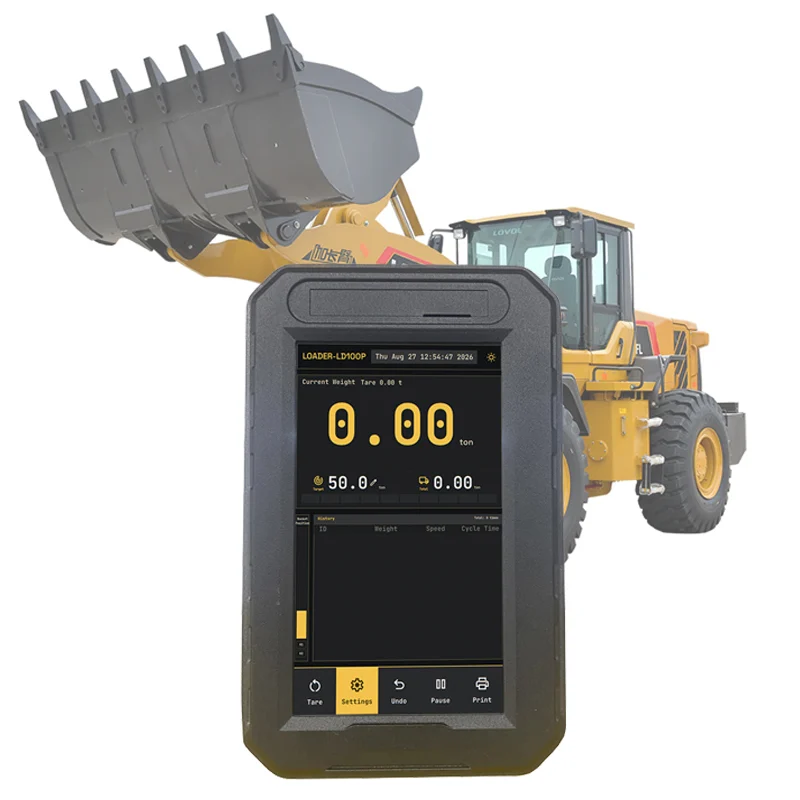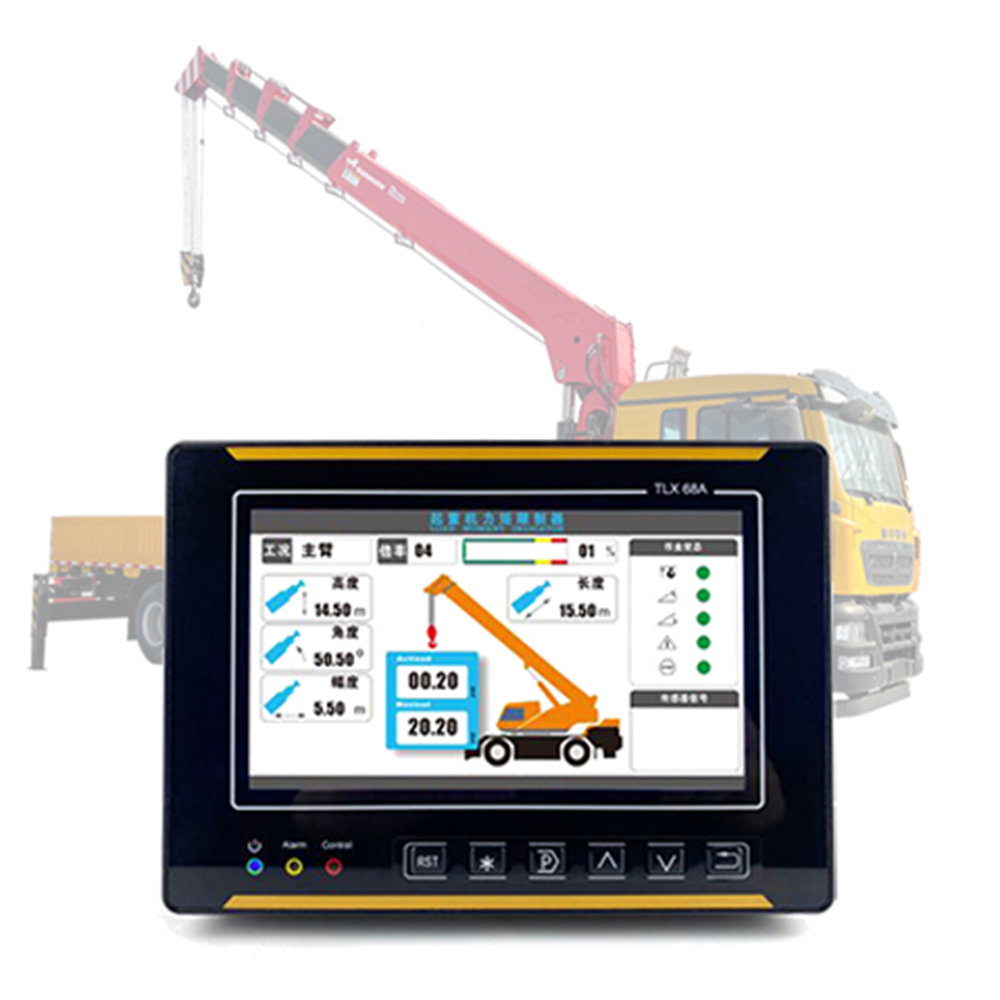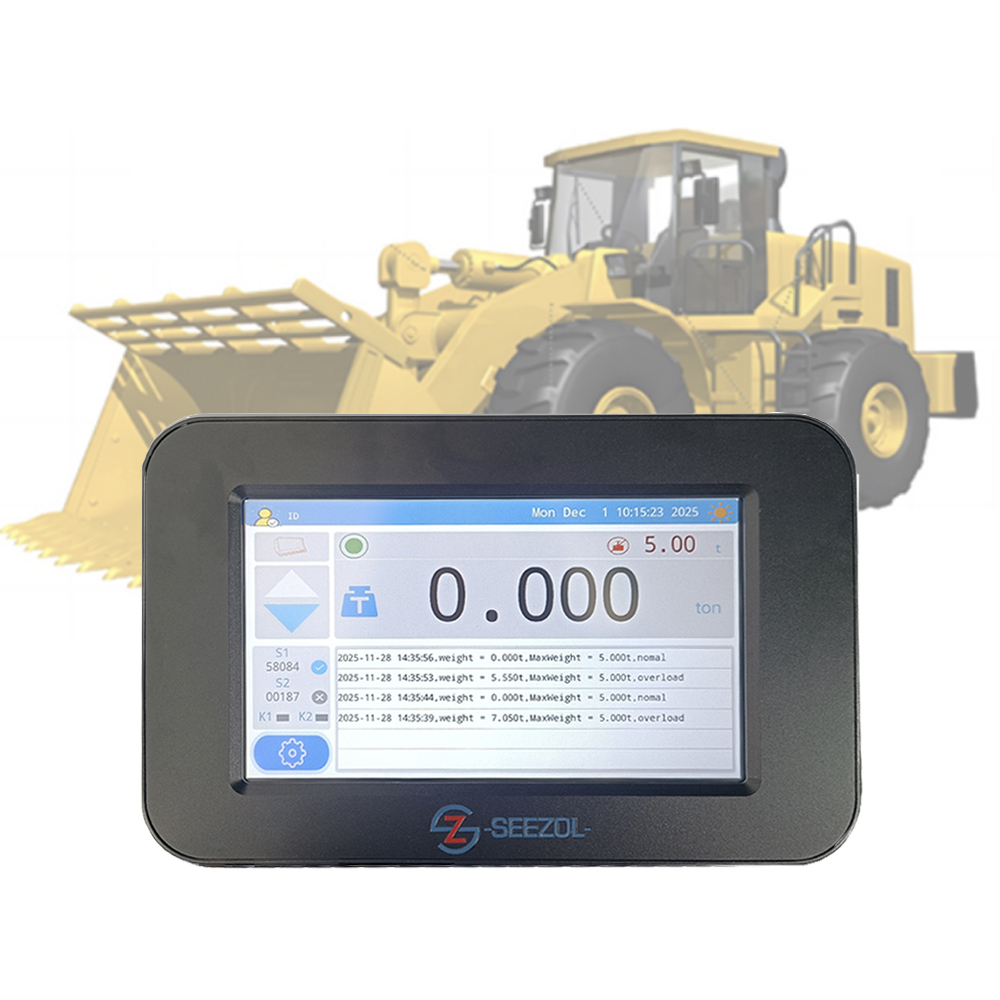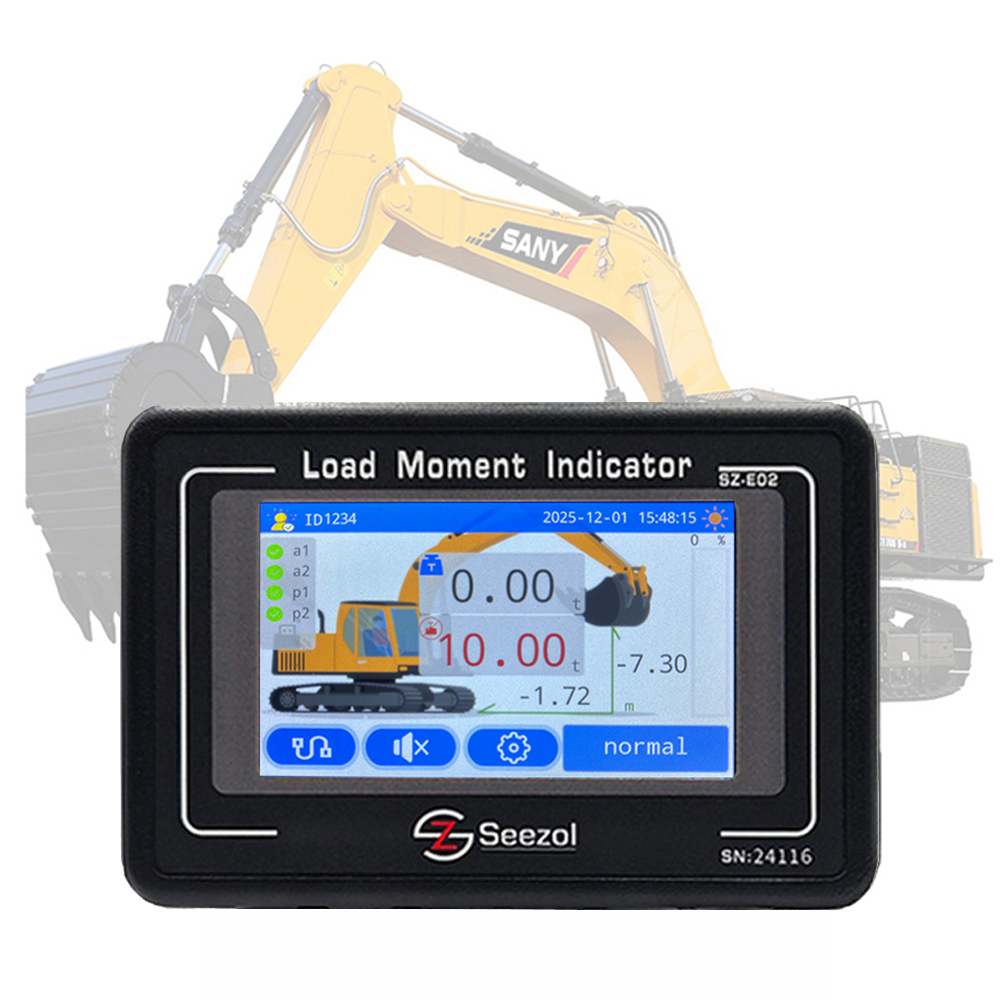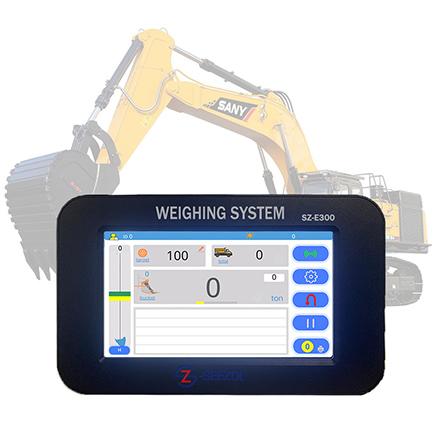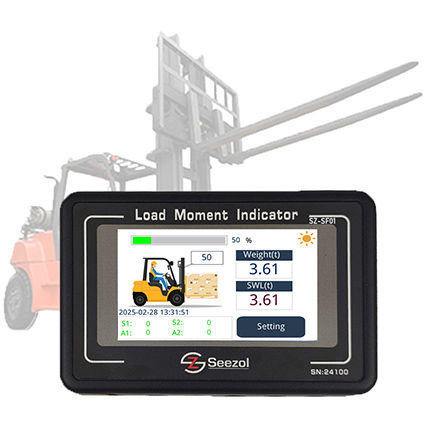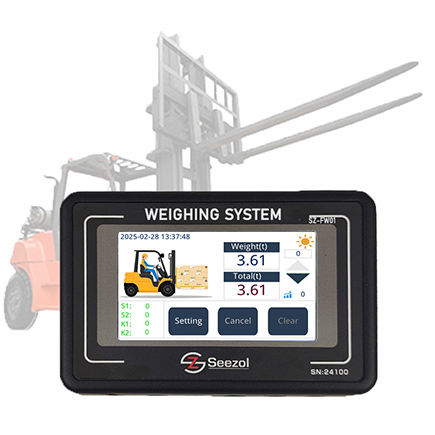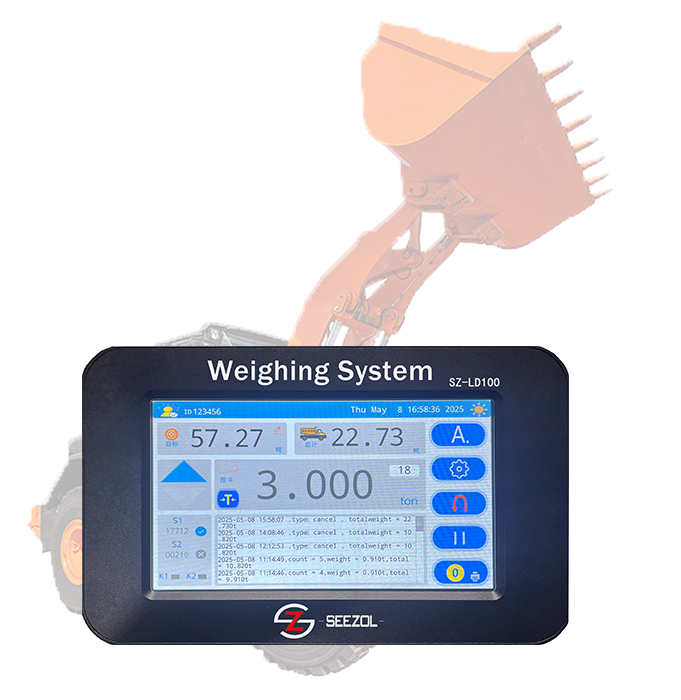
Quick Summary: Onboard weighing systems, load indicators, and load scales are three approaches to the same goal — knowing your truck’s weight in real time without stopping at a certified weigh station. Onboard weighing systems utilize load cells or air suspension sensors that are permanently integrated into trucks or various types of loading vehicles; load indicators are the in-cab display component that shows weight readings; and “load scale” is the broader category encompassing everything from handheld gauges to full wireless fleet systems. The right choice depends on your suspension type, accuracy needs, budget, and whether you need Legal-for-Trade certification. In this guide I break down every major technology, compare real-world accuracy from verified sources, and walk through ROI calculations for different fleet sizes.
What Is an Onboard Weighing System (And Why Fleet Managers Can’t Ignore It in 2026)?
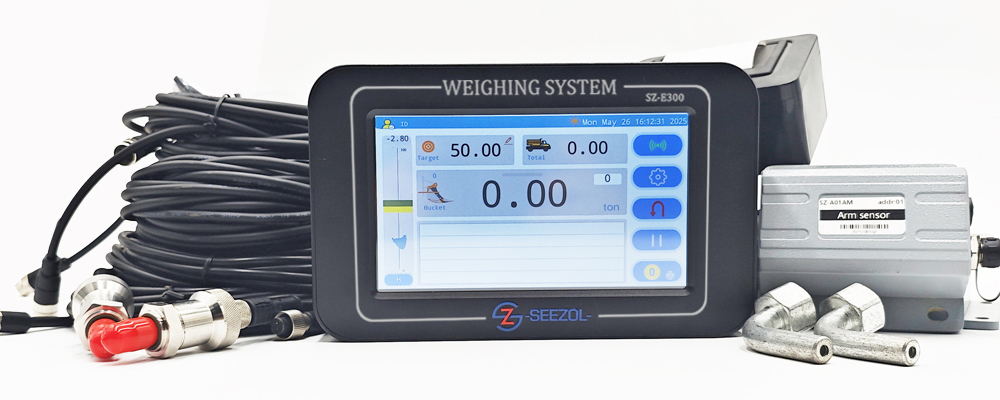
An onboard weighing systems are mobile weighing technologies that are permanently integrated into trucks, trailers, tractors, or loader-type vehicles such as excavators, loaders, and forklifts. — during loading, transit, or unloading — without requiring a stop at a certified weigh station.
The core purpose is simple: know your weight before a DOT officer tells you it’s wrong.
In the United States, the federal gross vehicle weight limit on Interstate highways is 80,000 lbs, with single-axle limits at 20,000 lbs and tandem-axle limits at 34,000 lbs (23 CFR Part 658). Violating these limits triggers fines that vary dramatically by state — ranging from $20-$150 for minor first-time offenses to several thousand dollars for repeat or extreme violations (with states like Illinois and Connecticut proposing escalating penalties for repeat offenders). According to the FMCSA’s 2025 civil penalty adjustment (Federal Register 2024-30608), maximum federal penalties for carrier violations can reach $19,246 per offense.
Here’s the financial math that makes onboard weighing compelling: a typical owner-operator pays $15.25 per stop at a certified CAT scale. At 2-3 scale stops per week, that’s $1,600-$2,400 per truck annually in direct scale fees alone — not counting the 15-30 minutes of drive time lost per stop. For a 50-truck fleet, the hidden cost of scaling stops alone can exceed $100,000 per year.
Onboard weighing systems existed before 1985, with early adoption in the logging industry. By the early 1990s, as states began more rigorous weight enforcement, waste hauling and aggregate operations adopted them rapidly. Today’s systems range from basic air-pressure gauges costing under $100 to fully integrated wireless fleet systems with Bluetooth, telematics, and fleet management software integration costing $5,000-$15,000 per vehicle.
The technology has evolved — but the choice has gotten harder.
AIO Quick Answer: An onboard weighing system is a permanently installed truck or trailer device that measures vehicle weight in real time using load cells, air-suspension sensors, or deflection transducers, eliminating the need to stop at certified weigh stations for weight compliance checks.
Load Indicator vs Load Scale: What’s the Actual Difference?
People use these terms interchangeably, and that creates confusion when you’re shopping. Here’s the distinction that matters:
Load Indicator
A load indicator is the display and readout component of a weighing system — the device in the cab (or wirelessly on your phone) that shows the weight reading to the driver. It receives data from sensors (load cells, pressure transducers, or air-suspension sensors) mounted elsewhere on the vehicle and translates it into a readable weight value, typically in pounds or kilograms.
Load indicators range from:
- Analog needle gauges (basic PSI-to-weight dial, $50-$150) — suitable for single owner-operators who mark their max-legal position
- Digital readout terminals ($300-$2,000) — essential for fleets with multiple drivers, providing per-asset calibrated readings
- Smartphone/tablet apps via Bluetooth sensors ($100-$500 for sensors + free/paid app) — modern wireless approach letting drivers check weights on personal devices
The critical point: a load indicator is only as accurate as the sensors feeding it. A $5,000 digital indicator connected to a poorly calibrated sensor will give you a bad reading with a nice LCD display.
Load Scale
“Load scale” is the broader category — the entire system from sensor to display. When someone says “I need a load scale,” they typically mean the complete package: sensors mounted on the truck, wiring or wireless connection, and the display unit in the cab.
In practice, this includes:
- Air-suspension pressure sensors reading directly from air bags
- Strain-gauge load cells mounted on the truck frame
- Deflection transducers measuring spring flex
- Hydraulic pressure sensors tapping into the lift circuit
- Weigh pads (portable, external devices rolled under tires)
Why This Distinction Matters for Buying
When comparing products, you’re really comparing complete systems, not just indicators. The sensor technology determines accuracy; the indicator determines usability. Both matter, but the sensor is the harder problem to solve.
| Component | What It Does | Cost Range | Accuracy Driver? |
|---|---|---|---|
| Sensor (load cell, pressure sensor, etc.) | Measures physical force | $50-$5,000 | YES — this determines accuracy |
| Indicator (display, app, terminal) | Shows weight to driver | $100-$3,000 | No — only displays what sensor provides |
| Complete System | Sensor + Indicator + Wiring | $200-$15,000 | Depends on sensor quality |
Key Insight: When evaluating “load indicator accuracy,” you’re really evaluating the sensor accuracy — the indicator just displays it.
The 5 Types of Onboard Weighing Technologies (And What Each Actually Measures)
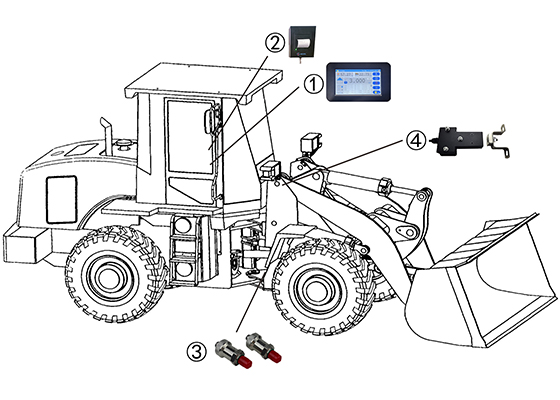
Understanding the technology taxonomy is essential before comparing products. There are five distinct sensing approaches used in onboard systems, each measuring something different and each with specific accuracy characteristics.
1. Load Cell Scales (Direct Force Measurement)
Load cells are transducers that convert physical weight into an electrical signal — the same technology used in stationary weighbridges and portable weigh pads. Strain gauges bonded to a metal element deform under load, changing electrical resistance, which a signal conditioner converts to weight.
What makes them special: They measure weight directly and independently of the vehicle’s suspension condition. This is their fundamental advantage over all indirect methods.
Types within load cells:
- Analog load cells — in use since the 1960s; lowest initial cost; prone to signal interference from RFI and temperature; no diagnostic features; requires manual adjustment (Brady Systems rates them 2/5 for accuracy and 1/5 for reliability)
- Digital load cells — convert analog voltage to digital signal within the load cell enclosure; stronger signal, less susceptible to interference; some offer self-monitoring and diagnostic alerts (Brady Systems rates them 4/5 for accuracy)
- POWERCELL (METTLER TOLEDO) — digital with onboard signal processing and predictive diagnostics; hermetically sealed stainless steel; rated 5/5 for accuracy and reliability (based on 50,000+ field tests per Brady Systems)
Typical configuration: Most truck scales use 6-12 load cells working together. The junction box combines their outputs into one calibrated signal.
Best for: Operations requiring Legal-for-Trade billing certification, operations where suspension condition varies (older trucks, mixed fleets), applications where “near-perfect weight measurement is mission-critical” (per Air-Weigh’s comparison).
Limitations: Requires structural modifications to the truck frame; complex and time-consuming installation; higher upfront cost; vehicle must be taken out of service during installation.
Accuracy range: ±1% of capacity (SkidWeigh ED2: ±1% per manufacturer spec; stationary systems: ±0.03% to ±0.5% per industry data from Pat Kruger).
2. Air-Suspension Pressure Scales (Indirect Measurement)
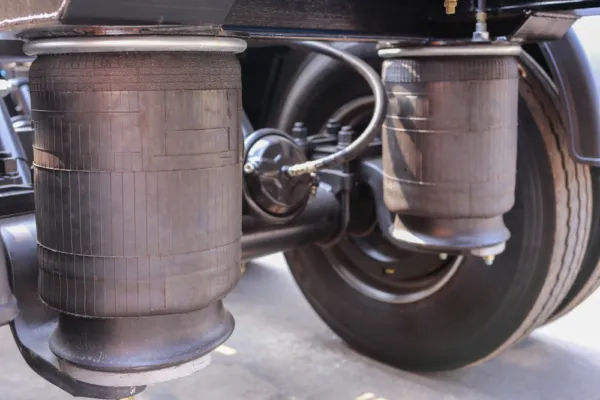
These systems measure the air pressure in a vehicle’s air suspension bags and use algorithms to calculate weight. The fundamental principle: heavier loads require more air pressure to support them.
How they work: Sensors are placed inline with existing air lines. A pressure transducer reads PSI, and firmware converts that to weight using calibration data specific to that truck/trailer.
What makes them popular: Installation takes roughly 10 minutes, requires no professional installer, and doesn’t alter the vehicle’s rated capacity. For air-ride suspensions, it’s the least invasive option.
Air-Weigh iWeigh (launched March 2025): The latest generation, supporting both air and mechanical suspensions via Bluetooth, SAE J1939 CAN bus, and app connectivity. Compatible across all truck brands, with backward compatibility to LoadMaxx systems. 3-year warranty, manufactured in USA.
Real-world accuracy (from Reddit/TruckersReport):
- “They are pretty accurate. I have on my truck and trailer. That’s what I load off of. Then I scale. I rarely have to go back and get more or pump out” (r/Truckers, 2024)
- “The air scale will lose accuracy the farther away from where you set it. Meaning, if you have 34k on your drives, verified by a certified scale… it will be less accurate on the steer axle” (r/Truckers, 2024)
- BIT Air Scale claims 99% accuracy with proper calibration (Blue Ink Tech)
Limitations: Must be calibrated against a certified scale; accuracy depends on level ground; readings drift with temperature and suspension wear; not suitable for Legal-for-Trade certification.
Best for: Class 7/8 fleets with air-ride suspension focused on legal compliance and payload optimization, drop-and-hook operations, fleets wanting minimal installation downtime.
3. Deflection Transducers (Mechanical Spring Measurement)
For trucks with mechanical (spring) suspensions, deflection transducers measure how much the springs flex under load. The amount of spring compression correlates to weight.
How they work: Sensors are attached to axles or beams, measuring physical displacement. Algorithms convert deflection data to weight.
Best for: Dump trucks, garbage trucks, roll-off trucks, and other vocational vehicles that typically run on spring suspension.
Walz Scale pricing (published, 2026):
- DT-100 (dump truck): $5,895 (98%+ accuracy)
- RT-100 (garbage truck, side-load): $5,895 (98%+ accuracy)
- RO-100 (roll-off): $5,895 (97%+ accuracy)
Limitations: Requires more complex installation than air-suspension systems; accuracy can vary with spring wear over time; needs periodic recalibration.
4. Hydraulic Pressure Sensors (Lift Circuit Measurement)
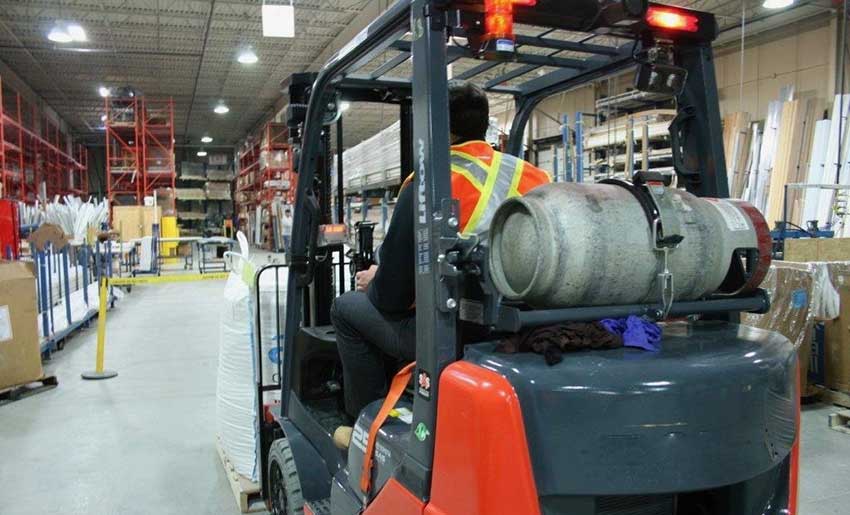
Used primarily in forklifts, loaders, and material handling equipment. A hydraulic pressure transducer in the lift circuit measures the pressure required to lift a load, converting it to weight.
SkidWeigh ED2 (the industry standard for forklift scales):
- Accuracy: ±1% of rated capacity
- IP65 rated enclosure (dust and moisture proof)
- Operating voltage: 12-60 VDC
- Does not alter the rated capacity of the vehicle
- Installation time: minimal (connects to existing hydraulic circuit)
- Price: ~$795-$1,460 depending on model tier (Walz Scale data)
Best for: Warehouses, logistics facilities, recycling operations, and any environment where forklifts or loaders need to verify load weights during handling.
5. Air-Suspension PSI Gauges (Estimation Only)
Basic air-pressure gauges (not true scales) that show PSI with a dial face. Some versions can be calibrated to read in pounds rather than PSI.
Right Weigh (market leader in this category):
- Analog dial-face gauge reading in pounds
- Must be calibrated against a certified scale
- Used by owner-operators as a quick-reference check
Real driver experience (from TruckersReport):
- “Right Weigh is the best. App Weigh works too. You just have to keep up with batteries and calibrate it when empty with a cat scale” (Facebook trucking group, 2025)
- “Right Weigh requires scaling the load and adjusting the gauge to read accurately. It’s just an air gauge with the dial reading pounds on the axle group” (TruckersReport, 2018)
Limitations: Lowest accuracy of all methods; requires regular recalibration; only suitable for estimation, not compliance. Not a “scale” in any technical sense.
Technology Comparison Table: Which Onboard Weighing System Fits Your Fleet?
| Technology | Accuracy | Cost Range | Install Time | Suspension Type | Legal-for-Trade | Best For |
|---|---|---|---|---|---|---|
| Load Cell (Digital) | ±0.5-1% | $3,000-$15,000 | 1-3 days | Any | YES (with NTEP cert) | Billing, compliance-critical |
| Air-Suspension Scale | ±1-3% | $300-$4,000 | 10-30 min | Air ride only | No | General compliance, payload |
| Deflection Transducer | ±2-3% | $3,500-$6,000 | Half day | Spring only | No | Vocational trucks |
| Hydraulic Pressure | ±1% | $795-$1,460 | 1-2 hours | Any (hydraulic equip.) | Yes (SkidWeigh ED2) | Forklifts, loaders |
| PSI Gauge (Analog) | ±5-10% | $50-$150 | 10 min | Air ride only | No | Estimation only |
Key takeaway: If you need Legal-for-Trade certification for billing purposes, digital load cells are essentially the only option. For compliance checking and payload optimization, air-suspension scales offer the best balance of accuracy, cost, and installation ease.
How Much Does an Onboard Weighing System Cost? (Real Numbers for Real Fleets)
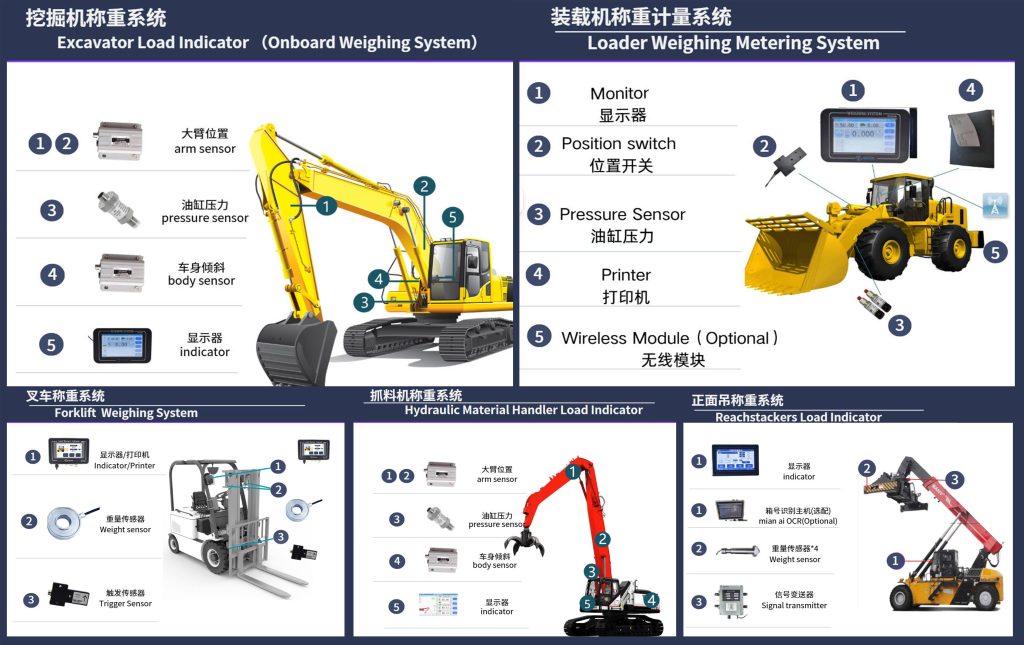
Pricing in this market is notoriously opaque — most manufacturers require you to “speak with a specialist.” Here’s what I’ve been able to compile from published data and verified sources:
Published Pricing (Walz Scale, verified 2026)
| Product | Type | Accuracy | Price |
|---|---|---|---|
| LT-100 (lift truck, basic) | Hydraulic | 95%+ | $795 |
| LT-200 (lift truck, advanced) | Hydraulic | 98%+ | $1,460 |
| LS-200 (wheel loader) | Hydraulic | 99%+ | $3,300 |
| TT-100 (tractor/trailer, air ride) | Air suspension | High (unspecified) | $3,950 |
| DT-100 (dump truck) | Deflection | 98%+ | $5,895 |
| RT-200 (garbage truck, front-fork) | Deflection | 99%+ | $14,995 |
Component Cost Ranges (Compiled from Multiple Sources)
| Component | Budget Option | Mid-Range | Premium |
|---|---|---|---|
| Analog PSI gauge (Right Weigh style) | $50-$100 | $100-$200 | — |
| Bluetooth air-sensor + app (BIT, etc.) | $200-$400 | $400-$800 | $800-$1,500 |
| Full air-suspension system (per vehicle) | $500-$1,500 | $1,500-$4,000 | $4,000-$8,000 |
| Load cell system (per vehicle, installed) | $3,000-$5,000 | $5,000-$10,000 | $10,000-$15,000 |
| Forklift scale (SkidWeigh ED2) | $795-$1,000 | $1,000-$1,500 | $1,500-$3,000 |
ROI Calculation Framework
Scenario A: Owner-Operator (1 truck)
- CAT scale cost: $15.25/stop × 8 stops/month = $122/month = $1,464/year
- HOS time lost: 15 min × 8 stops × 250 working days ÷ 12 = 25 hours/year
- Driver wage cost of lost time: 25 hrs × $25/hr = $625/year
- Total annual cost of scaling stops: ~$2,089
- Air-suspension system investment: $300-$800
- Payback period: 2-5 months
Scenario B: Mid-Size Fleet (50 trucks)
- Annual scale stop costs: 50 × $1,464 = $73,200
- Annual HOS time cost: 50 × $625 = $31,250
- Annual overweight fine exposure: conservative estimate $10,000-$50,000
- Total annual risk/exposure: $114,450-$154,450
- Full system investment (air suspension): 50 × $2,500 = $125,000
- Payback period: 10-16 months
Scenario C: Large Fleet (200 trucks)
- The math becomes compelling: $457,800-$617,800 in annual exposure vs. $500,000 system investment
- Payback in year one, with ongoing savings thereafter
Note: These calculations are based on published scale fee rates and HOS time estimates from fleet industry data, not from my own fleet operations. Your actual numbers will vary based on route density, load frequency, and regional scale fees.
When an Onboard Weighing System Isn’t the Answer (Limitations Nobody Talks About)
Every manufacturer wants you to buy their system. Here’s what they’re less eager to tell you:
When Air-Suspension Scales Won’t Work Well
- Trucks with airbag upgrades or modifications — the system was calibrated for stock suspension; aftermarket airbags throw off the readings. As one Reddit user noted about Ford’s OEM system: “The onboard scale only works when the suspension is exactly stock — add bags or something and it won’t be right” (r/superduty, 2025)
- Extremely cold climates — air pressure is temperature-dependent; readings can drift in extreme cold without temperature compensation
- Mixed suspension fleets — if you have both air-ride and spring trucks, you need different systems for each
When Load Cells Aren’t Worth It
- Trucks nearing end of life — the structural modification cost doesn’t make sense on a vehicle with 2 years remaining
- Occasional use — if you scale less than once a week, the investment may not pay back before the truck retires
- Trucks with non-standard frames — custom or modified frames may not accommodate standard load cell mounting
Calibration Is Not Optional
Every onboard system requires periodic calibration against a certified scale. This is not optional — it’s the foundation of accuracy. A Right Weigh gauge or Air-Weigh sensor that hasn’t been calibrated in 6 months is giving you numbers, not weights. Plan for:
- Initial calibration at a certified CAT scale or equivalent
- Recalibration every 6-12 months (or after any suspension work)
- Spot checks against a certified scale at least quarterly
It Won’t Replace Your CAT Scale Ticket
An onboard system is for your own reference and optimization. It does not replace a certified scale ticket for DOT compliance purposes. If you’re pulled into a weigh station, they’ll use their certified scales — not your onboard reading. The value is in avoiding being overweight in the first place, not in arguing with an officer about your personal gauge.
How to Choose the Right Onboard Weighing System (Decision Framework)
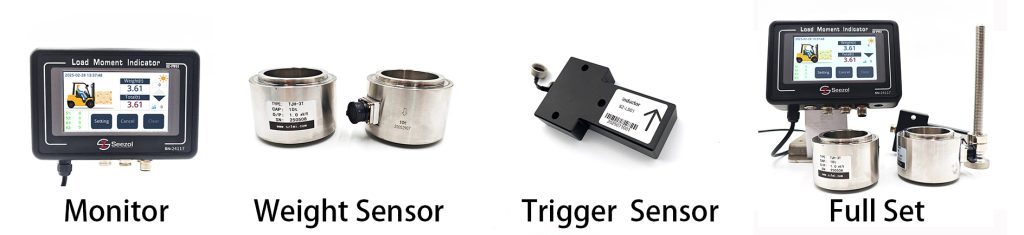
Stop reading reviews and start answering questions:
Question 1: What’s Your Suspension Type?
- Air ride: → Air-suspension scale (Air-Weigh, BIT, Right Weigh, or generic PSI gauge)
- Spring/mechanical: → Deflection transducer (Vulcan, Walz DT-100) or load cell system
- Hydraulic equipment (forklifts/loaders): → Hydraulic pressure sensor (SkidWeigh, Walz)
Question 2: What Accuracy Do You Need?
- Estimation only (rough idea if you’re in the ballpark): → PSI gauge ($50-$150)
- Compliance checking (avoid DOT fines): → Air-suspension or deflection system (95-99% accuracy)
- Billing/Legal-for-Trade (charging customers by weight): → NTEP-certified load cell system (±0.5-1% accuracy)
Question 3: How Many Trucks and What’s Your Budget?
- 1-5 trucks, tight budget: → Bluetooth air sensors + smartphone app ($200-$500 per truck)
- 10-50 trucks, moderate budget: → Mid-range air-suspension systems with in-cab displays ($1,500-$4,000 per truck)
- 50+ trucks, enterprise budget: → Integrated fleet systems with telematics, software, and data management (custom pricing, $5,000-$15,000 per truck installed)
Question 4: Do You Need Fleet Management Integration?
Modern systems connect to telematics platforms via SAE J1939 CAN bus, Bluetooth, or cellular (4G). If you’re already using fleet management software (Samsara, Geotab, etc.), look for systems that integrate natively. Air-Weigh’s iWeigh and Vulcan’s fleet systems both offer this.
Onboard Weighing System Installation: What to Expect (By Technology)

Air-Suspension Systems (Easiest)
- Installation time: 10-30 minutes per vehicle
- Professional installer needed: No — can be done by maintenance staff
- Vehicle downtime: Minimal (done in the yard between loads)
- What’s involved: Sensor placement in existing air lines, display mounting in cab, calibration against certified scale
Load Cell Systems (Most Complex)
- Installation time: 1-3 days per vehicle
- Professional installer needed: Yes
- Vehicle downtime: Significant (truck out of service during installation)
- What’s involved: Structural modification to truck frame, load cell mounting, junction box installation, display mounting, comprehensive calibration
Deflection Transducer Systems (Moderate)
- Installation time: Half day to full day per vehicle
- Professional installer recommended: Yes
- Vehicle downtime: Half to full day
- What’s involved: Transducer mounting to axles/beams, wiring to display unit, calibration
Forklift/Hydraulic Systems (Simple)
- Installation time: 1-2 hours per vehicle
- Professional installer needed: No — most kits are designed for self-install
- Vehicle downtime: Minimal
- What’s involved: Hydraulic pressure sensor tap into existing lift circuit, display mounting, calibration (SkidWeigh ED2: “lift a known load against weight of empty forks/attachment; software handles remainder”)
The Calibration Process: How to Keep Your Onboard Scale Accurate
Calibration is the single most important factor in long-term accuracy. Skip it, and your system becomes expensive decoration.
Initial Calibration Steps
- Drive to a certified scale (CAT Scale, state weigh station, or equivalent)
- Record the certified weight for each axle group and gross vehicle weight
- Adjust your onboard system to match the certified readings
- Repeat with different load levels (empty, half-load, full load) to ensure accuracy across the range
Ongoing Calibration Schedule
| System Type | Recommended Calibration Interval | Signs of Drift |
|---|---|---|
| Air-suspension | Every 6 months or after any suspension work | Readings differ from CAT scale by >300 lbs |
| Load cell | Every 12 months | Inconsistent readings between sessions |
| Deflection transducer | Every 6-12 months | Readings shift after heavy loading cycles |
| PSI gauge (analog) | Every 3-6 months | Needle position doesn’t match known loads |
Common Calibration Mistakes
- Calibrating on unlevel ground — all systems assume a level surface during calibration
- Using an old calibration after changing tires, suspension components, or adding accessories
- Forgetting to recalibrate after an empty-truck calibration if the truck’s tare weight has changed (new tires, added equipment)
Top Onboard Weighing System Brands in 2026 (Neutral Overview)
I’m not affiliated with any of these manufacturers. Here’s what the data shows:
Air-Weigh (Founded 1987, Eugene, OR)
- Latest product: iWeigh (March 2025) — all-makes compatible, Bluetooth + CAN bus, air and mechanical suspension support
- Strength: Wide compatibility, 3-year warranty, telematics integration, USA-manufactured
- Best for: Class 7/8 fleets wanting a single vendor across mixed truck brands
Vulcan Scales (Vishay Precision Group)
- Focus: Heavy-duty truck and trailer systems, timber industry specialist
- Strength: Corrosion-proof coating (EDOC), extreme environment durability, fleet management integration
- Best for: Timber, waste, aggregate, and harsh-environment operations
Walz Scale (Published pricing advantage)
- Range: Forklift scales ($795) to garbage truck systems ($14,995)
- Strength: Published pricing (rare in this market), 95-99%+ accuracy across product lines
- Best for: Operations wanting transparent pricing and a wide vehicle-type range
SkidWeigh / IVDT (30+ years, Oakville, Ontario)
- Accuracy: ±1% of rated capacity across all products
- Strength: Industry standard for forklift scales, IP65/IP67 ratings, universal compatibility
- Best for: Warehouse, logistics, and material handling operations
Blue Ink Tech (BIT)
- Focus: Air-scale Bluetooth systems
- Strength: Claims 99%+ accuracy, very simple installation, app-based interface
- Best for: Budget-conscious fleets wanting a quick, modern air-suspension solution
Right Weigh (Australia-based, global distribution)
- Focus: Analog and digital load scales for air and spring suspension
- Strength: Simple, affordable, real-world proven; smartphone app available
- Best for: Owner-operators and small fleets wanting basic, reliable weight monitoring
Rice Lake Weighing Systems
- Focus: Industrial weighing (broader than just truck scales)
- Strength: Legal-for-Trade certified systems (TradeRoute HL Series), deep indicator/controller product line
- Best for: Operations needing certified commercial weighing integrated into broader industrial processes
Real Fleet Experiences: What Drivers Actually Say About Onboard Scales
These observations come from driver forums and community discussions — real-world perspectives that manufacturer specs don’t capture.
On air scale reliability (r/Truckers, 2024):
“They are pretty accurate. I have on my truck and trailer. That’s what I load off of. Then I scale. I rarely have to go back and get more or pump out.”
On calibration reality (TruckersReport, 2018):
“Right Weigh requires scaling the load and adjusting the gauge to read accurately. It’s just an air gauge with the dial reading pounds on the axle group.”
On the value proposition (Facebook trucking group, 2025):
“Right Weigh is the best. App Weigh works too. You just have to keep up with batteries and calibrate it when empty with a cat scale.”
On limitations (r/superduty, 2025):
“The onboard scale only works when the suspension is exactly stock — add bags or something and it won’t be right. Neat party trick, but I’d say that’s about it. On top of that, it’s far from accurate even with factory suspension.”
On the practical workflow (Class A Drivers forum):
“Our Right Weigh gauges look like your psi gauge, only they read in actual pounds (lbs) and calibrate for accuracy so you know you’re legal on each axle group.”
The pattern from real users: onboard scales are genuinely useful for avoiding overloads and optimizing loading, but they require regular calibration and are not a substitute for certified scale tickets. Drivers who calibrate consistently report satisfaction; those who don’t are disappointed.
Frequently Asked Questions
How accurate are onboard weighing systems?
Accuracy varies significantly by technology: digital load cells achieve ±0.5-1% of capacity (the same technology used in stationary weighbridges); air-suspension scales achieve ±1-3% with proper calibration; and basic PSI gauges provide ±5-10% estimation only. For reference, at 80,000 lbs gross weight, ±1% means your reading could be off by ±800 lbs. Air-Weigh, Blue Ink Tech, and SkidWeigh all claim 99%+ accuracy under ideal conditions with proper calibration.
Do onboard scales count at DOT weigh stations?
No. An onboard scale reading is for your own reference and optimization only. DOT weigh stations use certified scales (typically NTEP-certified) for official weight determinations. The value of onboard systems is preventing you from being overweight before you reach the weigh station — not replacing the official measurement.
What is the difference between a load indicator and a load scale?
A load indicator is the display component (in-cab gauge, digital terminal, or smartphone app) that shows weight readings. A load scale is the complete system — sensors mounted on the vehicle + the indicator + connecting hardware. When shopping, you’re buying a complete system; the indicator is just the part you interact with.
How much does an onboard weighing system cost?
Costs range widely: basic analog PSI gauges for air-ride trucks cost $50-$150; Bluetooth air-sensor systems cost $200-$800 per vehicle; full air-suspension systems cost $1,500-$4,000 per truck installed; load cell systems cost $3,000-$15,000 per vehicle; forklift scales (SkidWeigh ED2) start at $795. Most manufacturers offer fleet volume pricing.
Can I install an onboard weighing system myself?
Air-suspension systems (like Right Weigh, BIT Air Scale) can typically be self-installed in 10-30 minutes — they connect inline with existing air lines. Load cell systems require professional installation with structural truck modifications and should not be attempted as a DIY project. Forklift scales (SkidWeigh) are designed for self-installation in 1-2 hours.
How often do I need to recalibrate my onboard scale?
At minimum: every 6 months for air-suspension systems, every 12 months for load cells, and every 3-6 months for analog PSI gauges. Also recalibrate immediately after any suspension work, tire changes, or if your readings consistently differ from a certified scale by more than 300 lbs.
Conclusion: What I’d Actually Recommend

After researching this market extensively — reviewing manufacturer specs, academic papers, regulatory data, and hundreds of real driver comments — here’s my practical take:
For most Class 7/8 fleets with air-ride suspension: An air-suspension system from Air-Weigh, Blue Ink Tech, or Right Weigh offers the best ROI. The $300-$4,000 per truck investment typically pays back in 1-3 months through eliminated scale fees and recovered HOS time alone — before you factor in avoided overweight fines.
For operations requiring Legal-for-Trade billing: You need NTEP-certified load cell systems. There’s no shortcut here. Budget $5,000-$15,000 per vehicle installed, and expect 1-3 days of downtime per truck during installation.
For forklift and material handling operations: SkidWeigh ED2 remains the industry benchmark at ±1% accuracy for $795-$1,460. The installation is straightforward and doesn’t alter rated capacity.
The most common mistake I see: Buying the cheapest option and never calibrating it. A $50 gauge that’s been calibrated against a CAT scale once is worth more than a $5,000 system that hasn’t been calibrated in a year. Whatever you buy, commit to the calibration schedule.
The honest truth about accuracy: No onboard system will ever perfectly match a certified static scale. That’s not the point. The point is having a reliable enough reading to avoid the $2,000+ overweight fine, the weigh station delay, and the drivetrain damage that comes from consistently overloading. An onboard system that gets you within 2-3% of actual weight does exactly that.