I. Technical Principle
The Proximity Warning Alert System (PWAS) employs multi-sensor fusion technology to establish a virtual safety protection zone—also known as a virtual electronic fence—around the vehicle, enabling real-time monitoring of the approach of pedestrians, objects, and other vehicles. When a potential collision risk is detected, the system immediately issues multi-level warning signals to both the vehicle operator and nearby personnel. If necessary, the system can also activate the vehicle’s control system to initiate emergency braking.
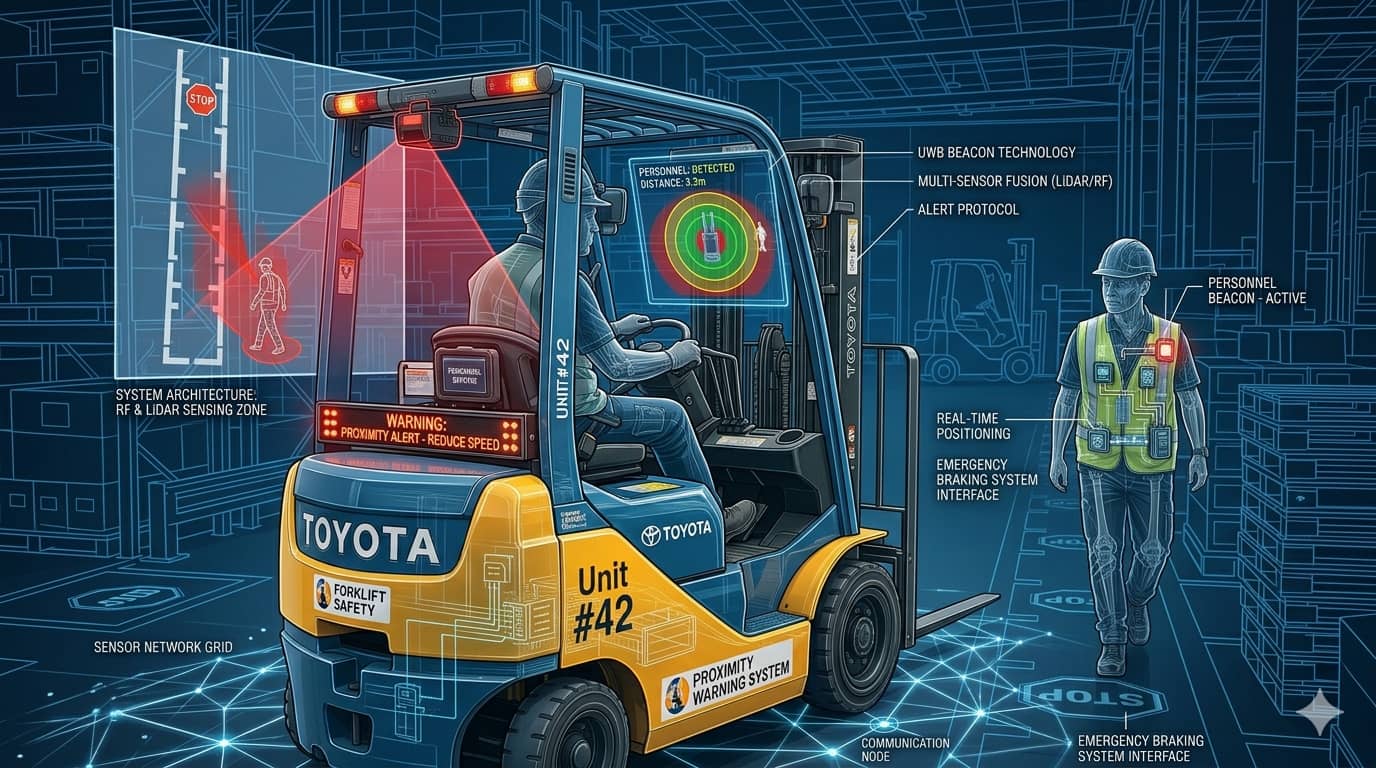
II. System Composition
Based on actual operating conditions and the unique characteristics of forklift visibility—where the forward view is relatively good while the rear view requires primary protection—this solution employs a combination of millimeter-wave radar and AI-powered visual recognition. By integrating radar-based warnings with AI-powered human detection and monitoring, it provides comprehensive safety protection for forklifts, significantly reducing the risk of collision accidents in industrial environments and enhancing both operational safety and efficiency.
III. List of Main Components
| No. | Component Name | Quantity | Technical Specifications | Functional Description |
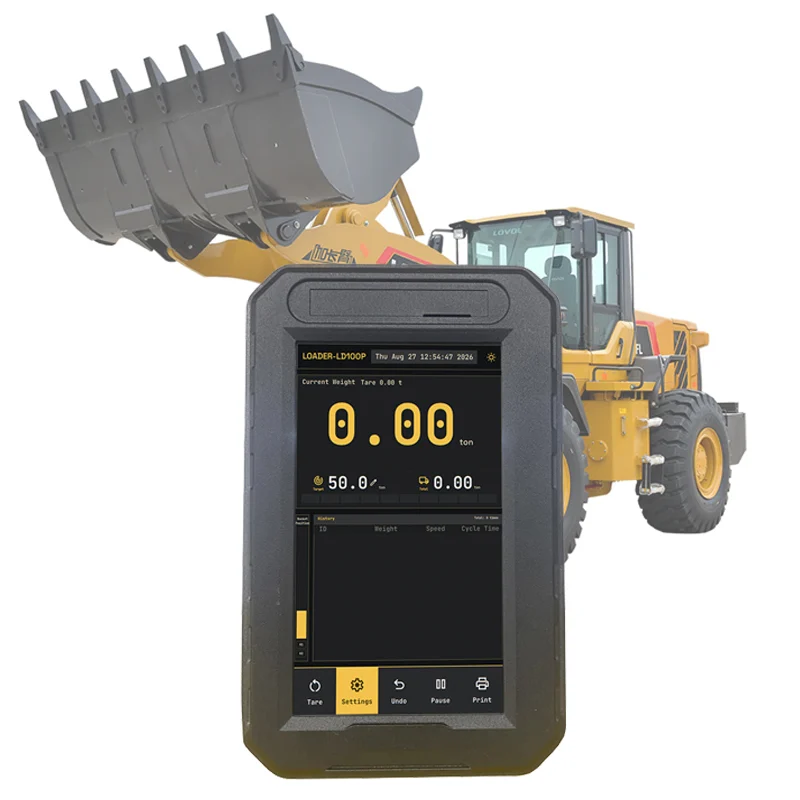
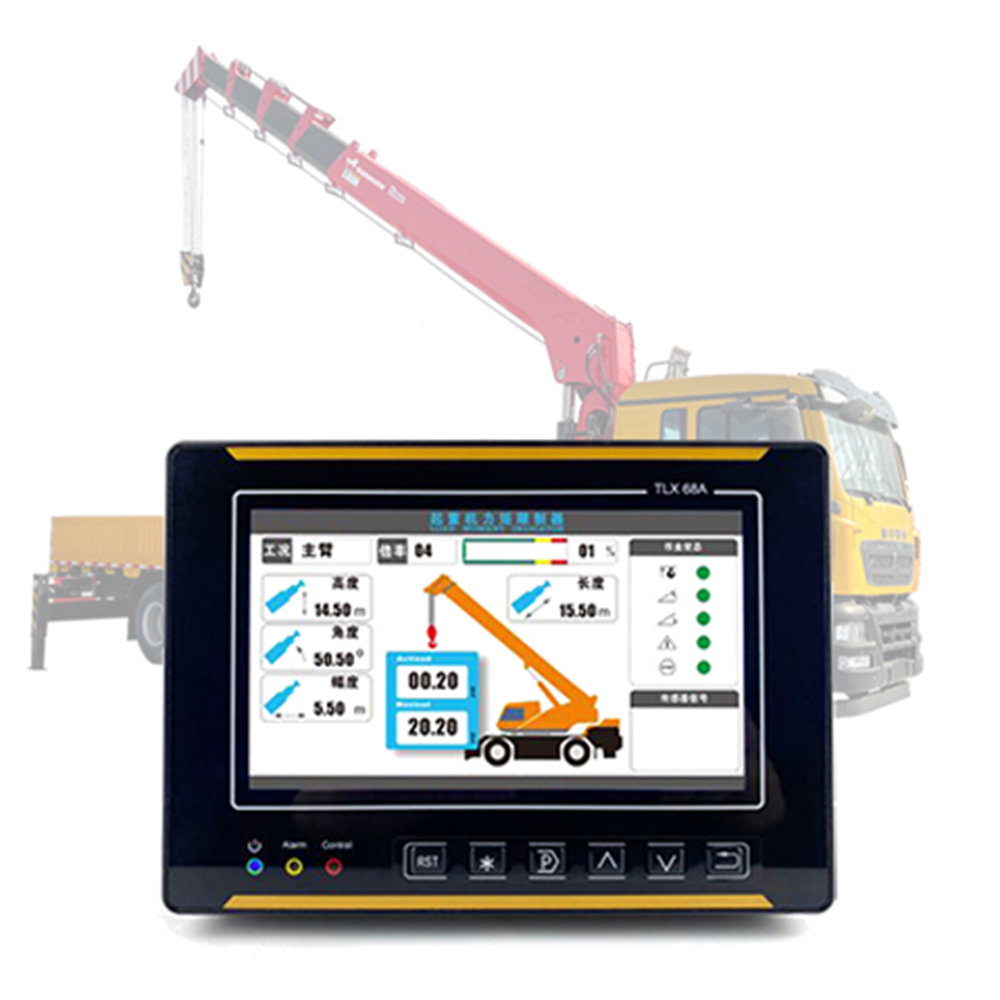
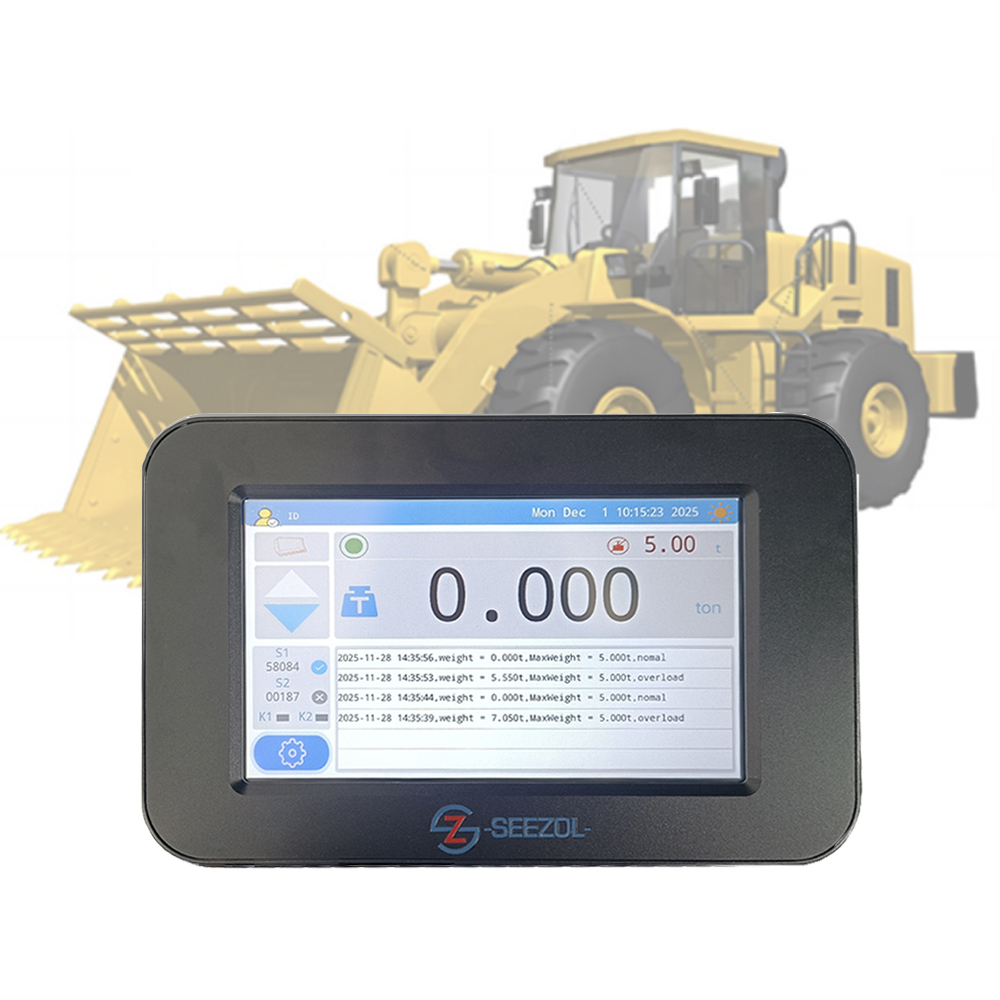
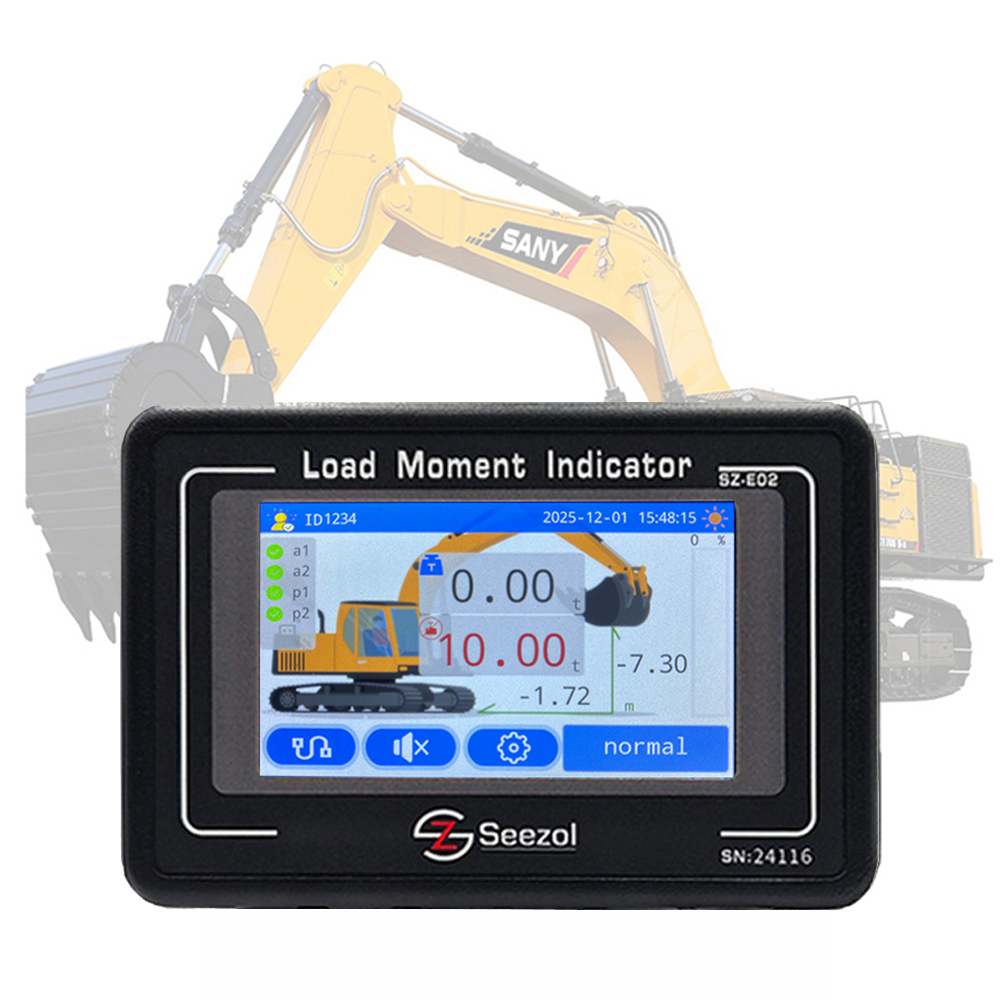
| 1 | Central Control Unit (CCU) & Display Terminal | 1 Set | Industrial ARM processor, 7-inch touchscreen, visible under sunlight, IP65 protection | Core system data processing, system status display, and parameter configuration |
| 3 | Millimeter-wave Radar Sensor | 3 Units | 77GHz, detection range 0.1-30m, 120° horizontal field of view | All-weather obstacle detection |
| 4 | AI Visual Camera | 1 Unit | 5 million pixels, 1080P@30fps, with infrared night vision | Human shape recognition and behavior analysis |
| 5 | Vehicle-mounted Warning Device | 1 Set | 110dB buzzer, high-brightness LED warning lights (Red/Yellow/Green three colors) | Multi-level audible and visual warning |
IV. Network and Communication Components
Industrial-grade CAN bus: connects various sensors to the control unit.
4G/5G communication module: 1 unit (optional), for remote monitoring and data uploading.
Wi-Fi or Bluetooth module: 1 unit (optional), for on-site configuration and data download.
V. Installation Location and Plan
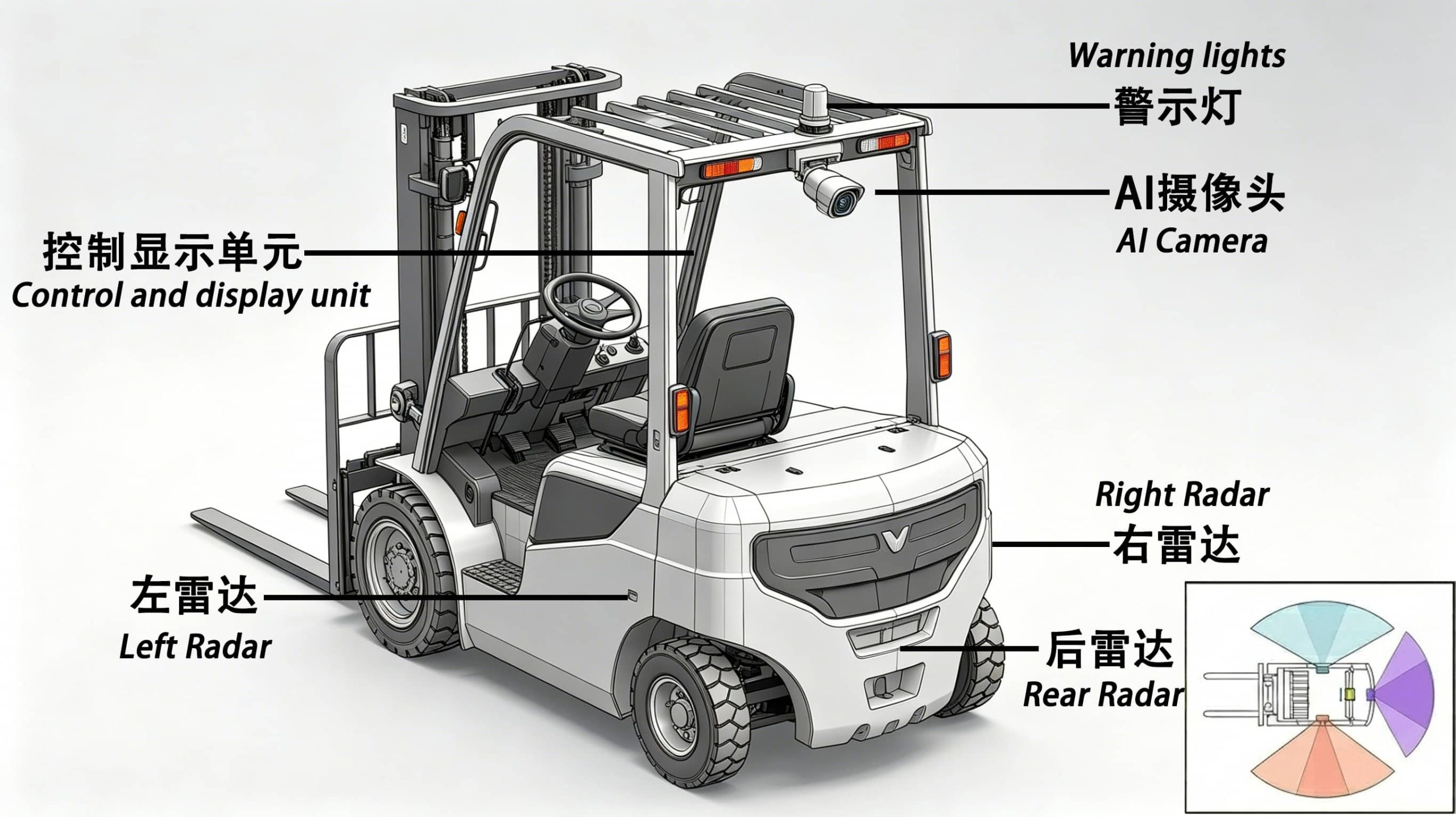
Detailed installation location instructions
1. Sensor installation
Lateral region:
Left-side millimeter-wave radar: Installed above the left rear wheel, covering the left rear area.
Right-side millimeter-wave radar: Installed above the right rear wheel, covering the right rear area.
Backward region:
Rear-mounted millimeter-wave radar: Installed in the central position at the rear of the forklift, covering the reversing area.
Rear-facing AI camera: Installed at the rear of the cab roof, covering the reversing area.
2. Installation of Core Equipment
Central control and display terminal: Installed on the right side of the driver’s dashboard for easy operator observation.
Power management module: Directly connects to the forklift battery and is equipped with a dedicated fuse.
3. Installation of warning devices
Audio-visual alarm: Integrated into the display terminal.
Sound-and-light warning light: A 360° rotating warning light is installed on top of the cab, with red, yellow, and green color zones.
Installation Technical Requirements
1.Electrical connection
Power requirements: Total system power ≤ 150W; it is recommended to use a separate 20A fuse.
Cable specifications: The sensor cable uses shielded twisted pair (CAT6A), and the power cable is ≥2.5mm².
Waterproofing: All external connectors use IP68-rated waterproof connectors, and cable entries are sealed for water resistance.
2.Mechanical Installation
Mounting method: The radar is installed using a flush-mount approach, while the AI camera is mounted on a stainless steel bracket equipped with shock-absorbing washers.
Installation angle: Radar sensor installation error ≤ ±1°, camera installation error ≤ ±0.5°.
Protective measures: Install protective covers on all external equipment to prevent collisions and dust ingress.
VI. Work Flow
Area Setting: Establish multiple layers of protective zones around the vehicle (warning zone, caution zone, danger zone).
Millimeter-wave radar detection: Monitoring of obstacles on the left, right, and rear.
AI Visual Recognition: Wide-angle HD camera that uses AI-powered dynamic recognition technology to identify and analyze objects or people approaching from the rear, as well as from the left and right rear directions.
Risk Assessment: By integrating radar and camera data and leveraging built-in algorithms, the system calculates the type, speed, distance, and trajectory of approaching objects, assesses the probability of collision, and provides early warnings for hazardous behaviors.
Warning: The screen flashes brightly, and the buzzer sounds to remind the driver to take protective measures promptly. The audio-visual warning lights emit audible and visual alerts according to the warning level, alerting other vehicles or pedestrians accordingly.
Tiered warning lights:
No warning (e.g., >8 meters): The LED light stays steadily green.
Level 1 Alert (e.g., 5–8 meters): Visual indication (yellow LED flashing).
Level 2 Alert (e.g., 3–5 meters): Auditory alert (intermittent warning tone) + visual indication (red and yellow LED flashing). Level 3 Alert (e.g., <3 meters): Loud auditory alert (rapid warning tone) + visual indication (rapid red LED flashing); optional integration with forklift control system (e.g., automatic deceleration).
Data logging: Records all alert events for safety analysis and training improvement.
Data Upload: If the communication module is configured, data can be uploaded to the system in real time, enabling remote monitoring.
Ⅶ. Technical Parameters
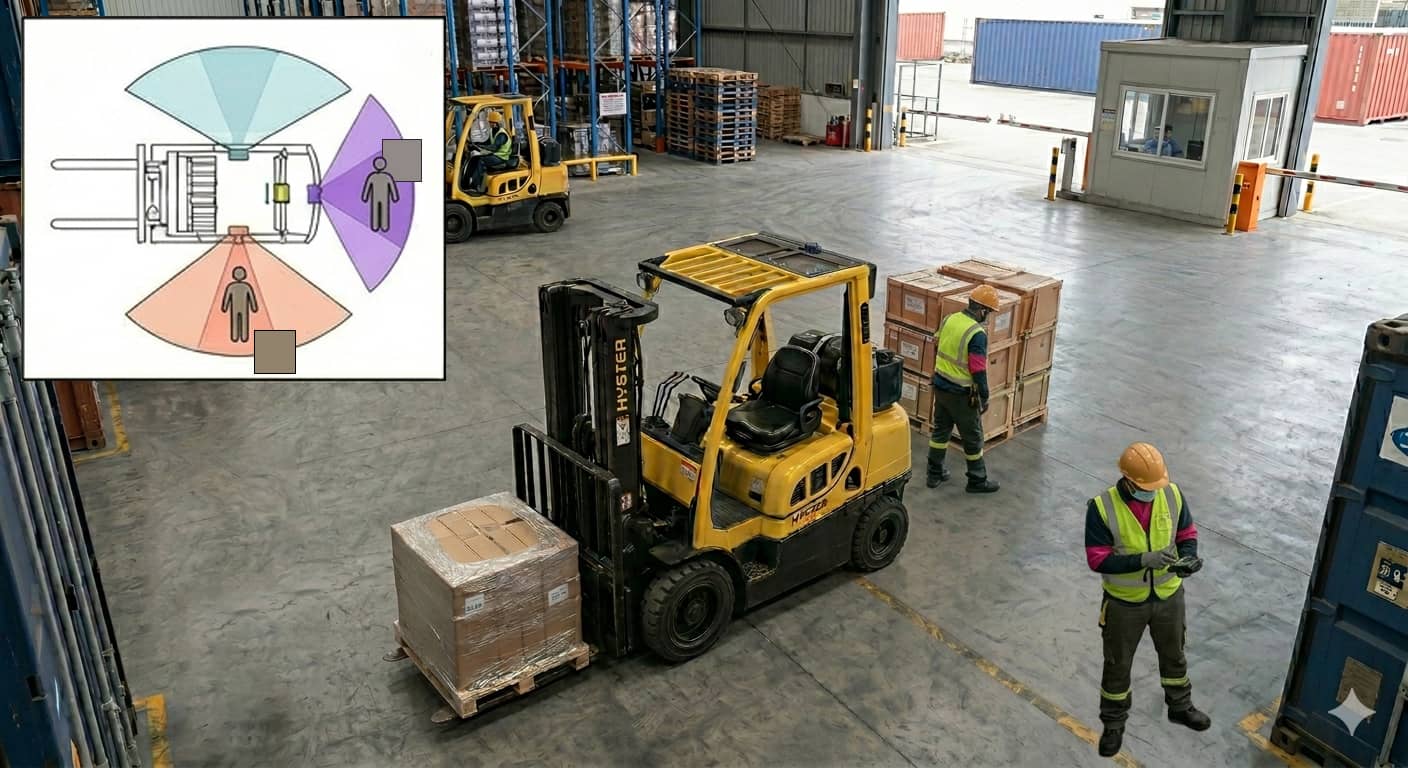
Detection range: 180° all-around rearward, up to 30 meters.
Positioning accuracy: Personnel/vehicle positioning accuracy ±10 cm.
Response time: <100 ms (from detection to alert).
False alarm rate: <1% (in a standard industrial environment)
Missed detection rate: <0.1% (within the designated protection area)
Ⅷ. System Upgrade
Software Upgrade: Supports remote OTA upgrades and enhances detection algorithms.
Hardware expansion: Reserved interfaces support increasing the number of sensors.
Function expansion: Supports integration with the factory’s MES system to achieve digitalization of safety management.