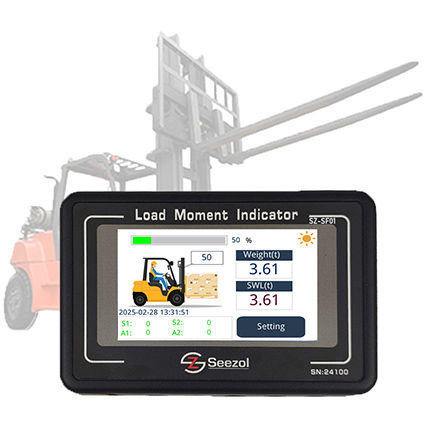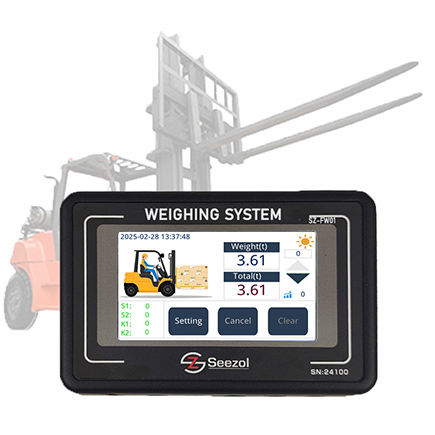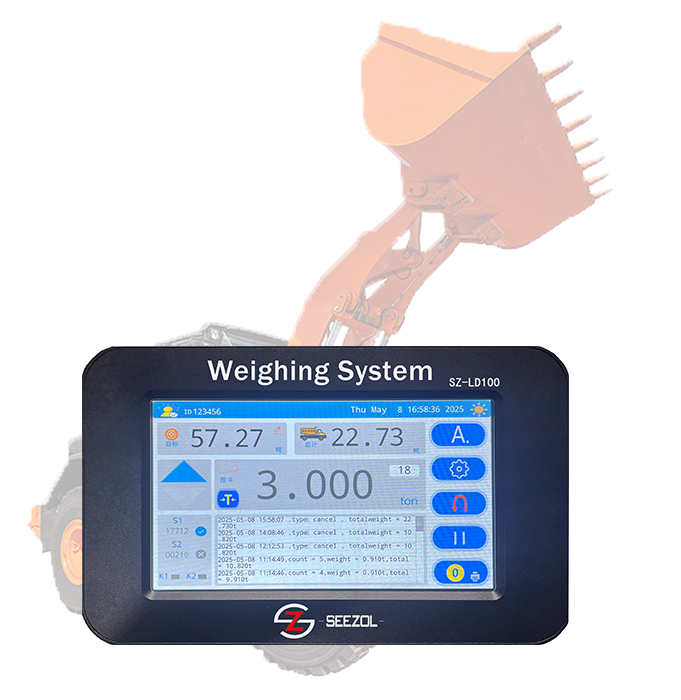
Disclosure of interest: This article is published by SeeZol (szlmi.com), a manufacturer of load moment indicators (LMI), safe load limiters and onboard weighing systems for construction machinery. We sell the equipment discussed below, so we have a commercial interest in the conclusions. We have tried to keep the line between fact and sales talk visible: we describe what each device is designed to do and the direction in which it acts, we do not quote accuracy, capacity or response-time figures for any model, and — in a dedicated section — we list what these devices cannot do.
One week, four incidents, one thread
On 6 October 2026, a mobile self-erecting tower crane collapsed on a building site in Ipsach, in the Swiss canton of Bern. The mast buckled and the jib came down across a railway line and a road. Nobody was injured. The Bern cantonal police said an investigation into the cause had been launched; as of 10 October 2026, no cause had been published, and nothing in this article should be read as assuming overload played a part (Vertikal.net, citing the Bern cantonal police).
One day earlier, reporting from the Old Bailey in London described the opening of the trial of Higgins Homes plc and four men over the death of Michaela Boor, who was struck by a pallet of bricks — more than two tonnes of them — that fell from a tower crane in Bow in March 2018. Prosecutors told the court that the pallet caught on scaffolding while it was being hoisted, that the crane operator had a restricted view of the load, and that no risk assessment had been carried out for lifting pallets so close to the pavement. The company and the four men deny the charges (BBC News).
On 8 October, a truck crane overturned in Shenzhen, China, while hoisting. The crane’s owner told local media that the load being lifted was overweight; no one was injured, and several electric bicycles parked at the roadside were damaged (The Beijing News).
Across 7–8 October, market-surveillance and inspection authorities in China published post-holiday enforcement notices. A notice from Zhuhai’s Jinwan district lists a missing or failed load-moment limiter or load-limiting device on lifting machinery among the conditions that constitute a major accident hazard (Jinwan district market-surveillance notice, via Tencent News), and a Guangdong special-equipment inspection institute travelled to Guizhou specifically to re-verify the moment limiters and load limiters of tower cranes on a highway project (China Quality News via Sina Finance).
Four items, four jurisdictions, one thread. In three of them the load itself — its weight, its path, or both — is the subject; in the fourth the cause is not yet known. What ties them together is the question every investigator asks first: did the machine know what it was carrying, and did anyone act on that information?
What crane overload protection actually does
A crane’s safe capacity is not one number. It depends on the radius, the boom angle and boom length, the configuration — outriggers, counterweight, parts of line — and the attachments in use. The load chart in the cab is a set of limits, and the allowed load falls as the radius grows. This is why two lifts of the same load can be perfectly safe at one radius and illegal at another.
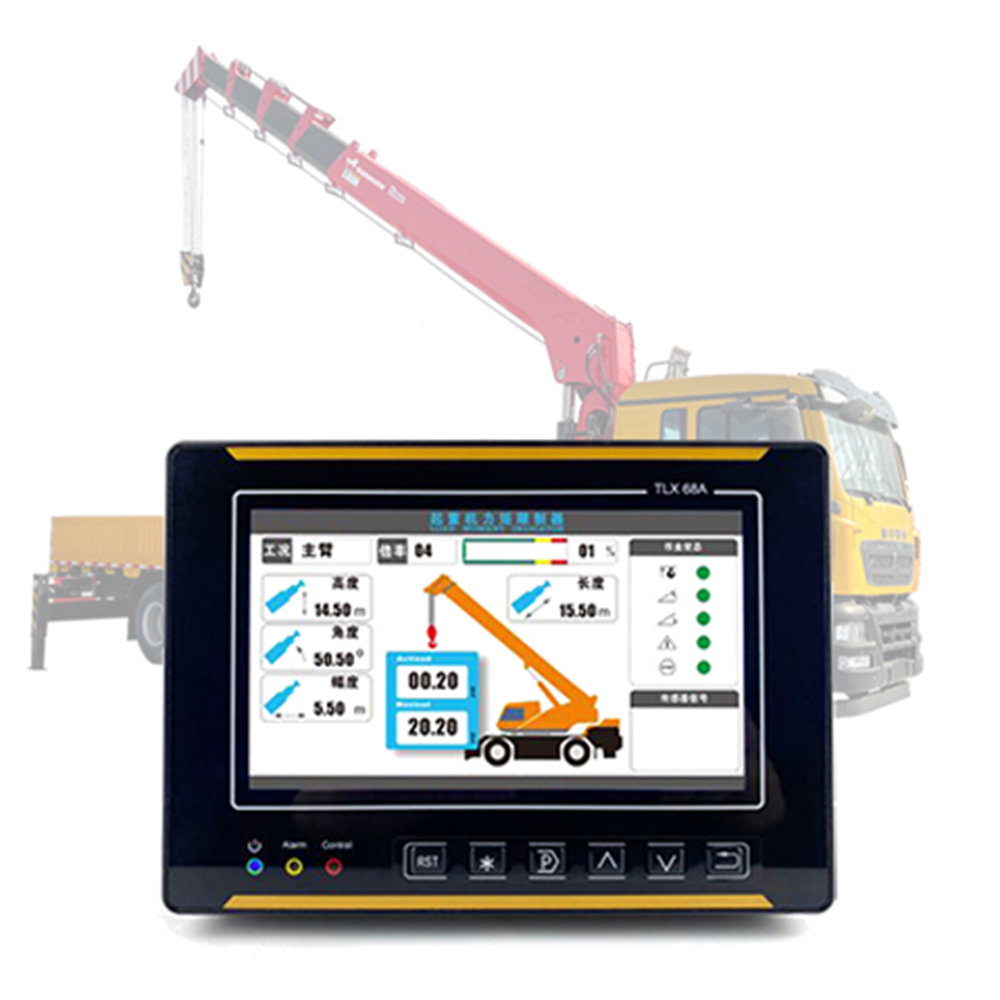
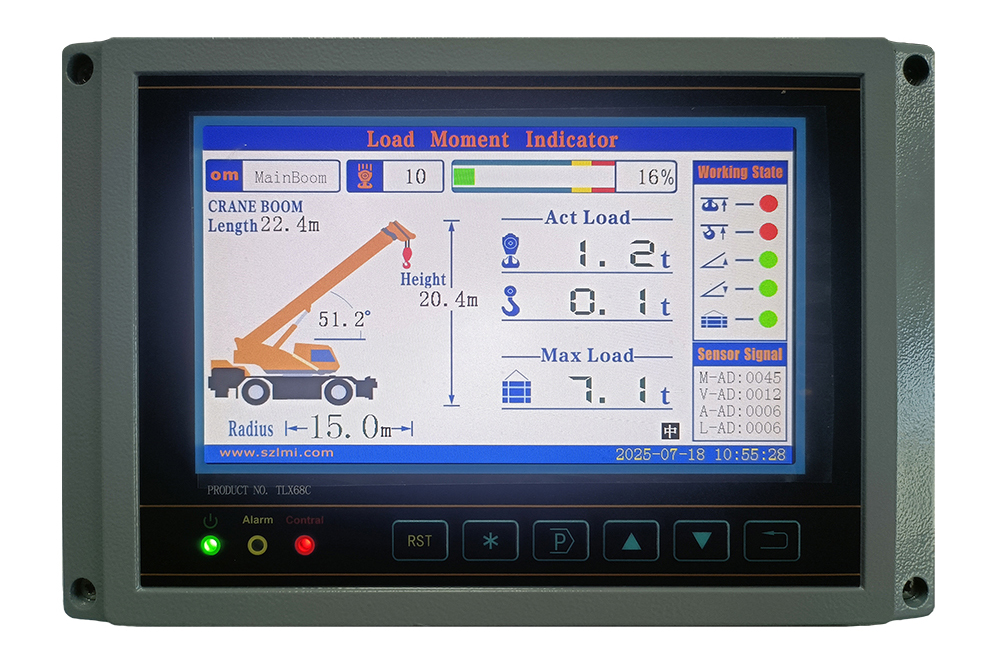
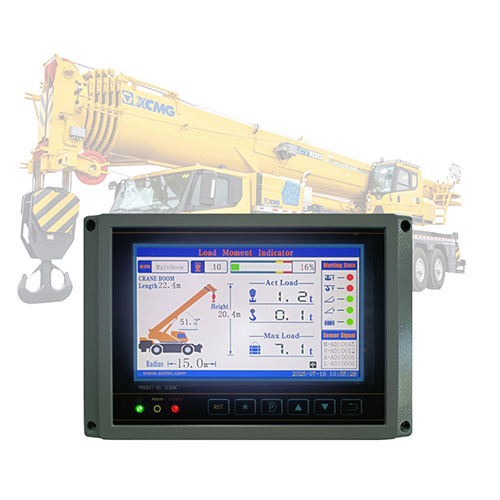
Crane overload protection is the electronic layer that keeps the machine on the right side of that chart. It reads live inputs — load, boom angle, boom length or radius — compares them against the stored load chart, and acts in one direction only: warn first, restrict next, and on limiter versions cut the dangerous motion before the limit is crossed.
In the United States this is not optional guidance. Under OSHA’s Subpart CC, equipment other than derricks and articulating cranes manufactured after 29 March 2003 with a rated capacity over 6,000 pounds must have at least one of the following: a load weighing device, a load moment (or rated capacity) indicator, or a load moment (or rated capacity) limiter (29 CFR 1926.1416(e)(4)(i)).
The same rulebook tells operators how to use the device. Equipment must not be operated in excess of its rated capacity, and the operator must verify the load weight either from a source or calculation method recognised by the industry, or by beginning to hoist and checking with a load weighing device, load moment indicator, rated capacity indicator or rated capacity limiter (29 CFR 1926.1417(o)).
Three devices, three jobs
“Overload protection” is an umbrella term that covers devices doing different jobs. Mixing them up is one of the most common reasons buyers end up with the wrong hardware.
| Device | What it measures | What it does | Typical machines |
|---|---|---|---|
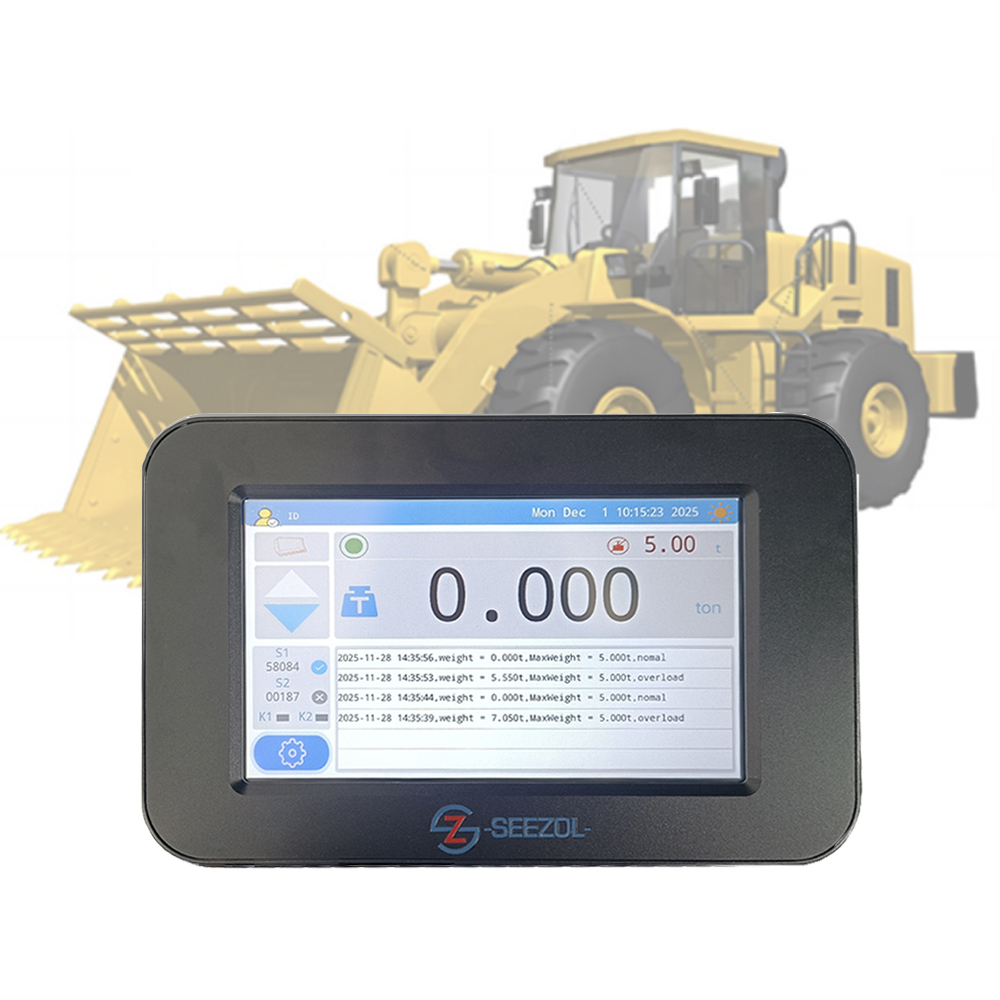
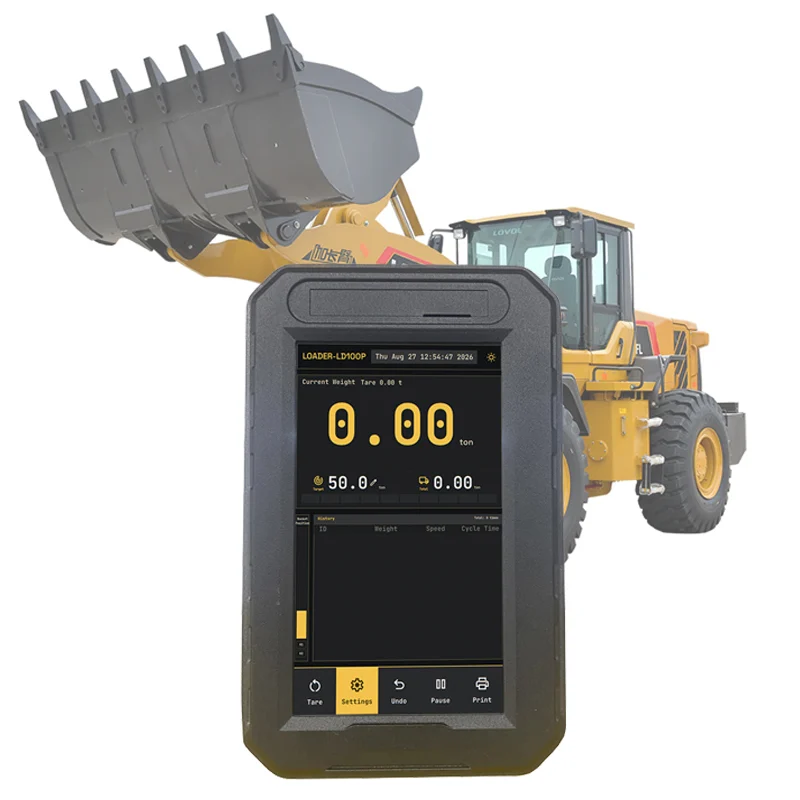
| Load weighing device / onboard scale | Weight of the load | Informs, accumulates, alarms at a set threshold | Wheel loaders, excavators, material handlers, forklifts |
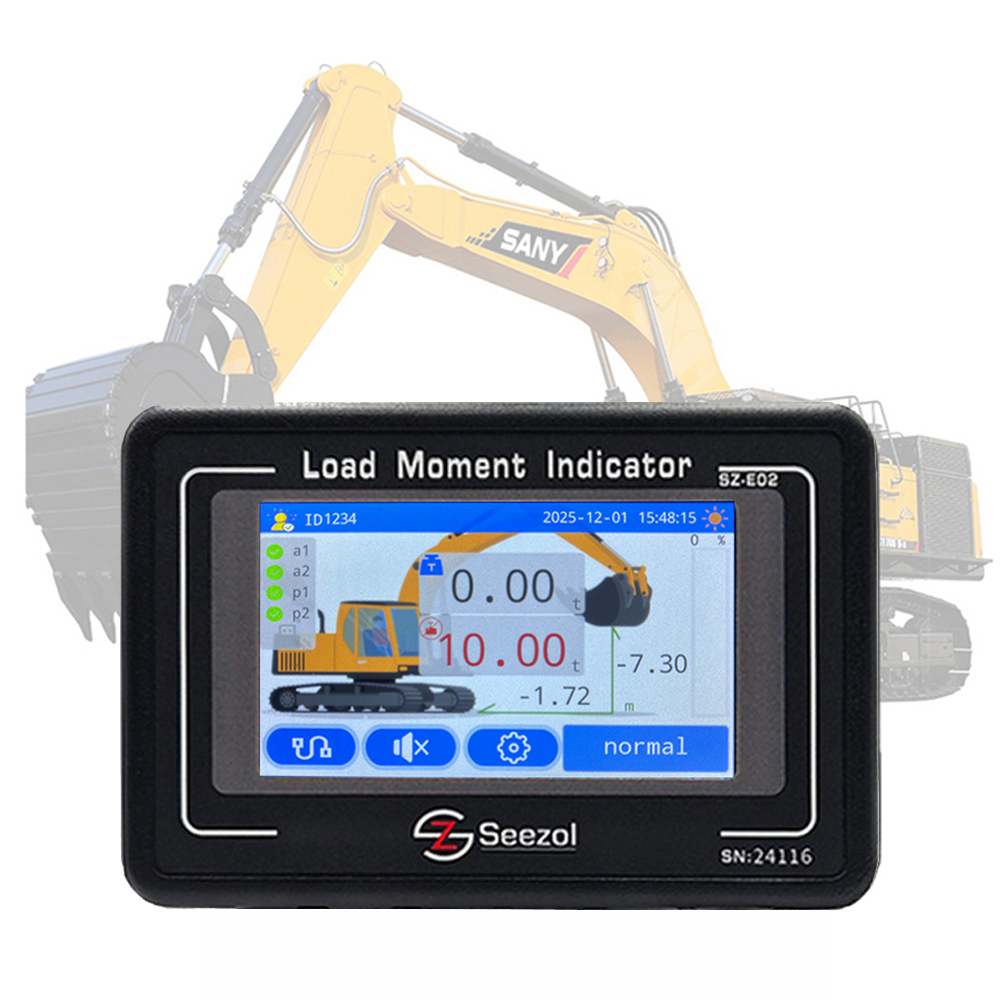
| Load moment / rated capacity indicator (LMI / RCI) | Load plus radius, boom angle and boom length, against the load chart | Displays the working condition and warns as capacity is approached | Truck cranes, mobile cranes, tower cranes, crawler cranes |
| Load moment / rated capacity limiter | Same inputs as the indicator | Also cuts hoist, boom or telescoping motion that would exceed the chart | Machines where tipping or structural overload is the dominant risk |
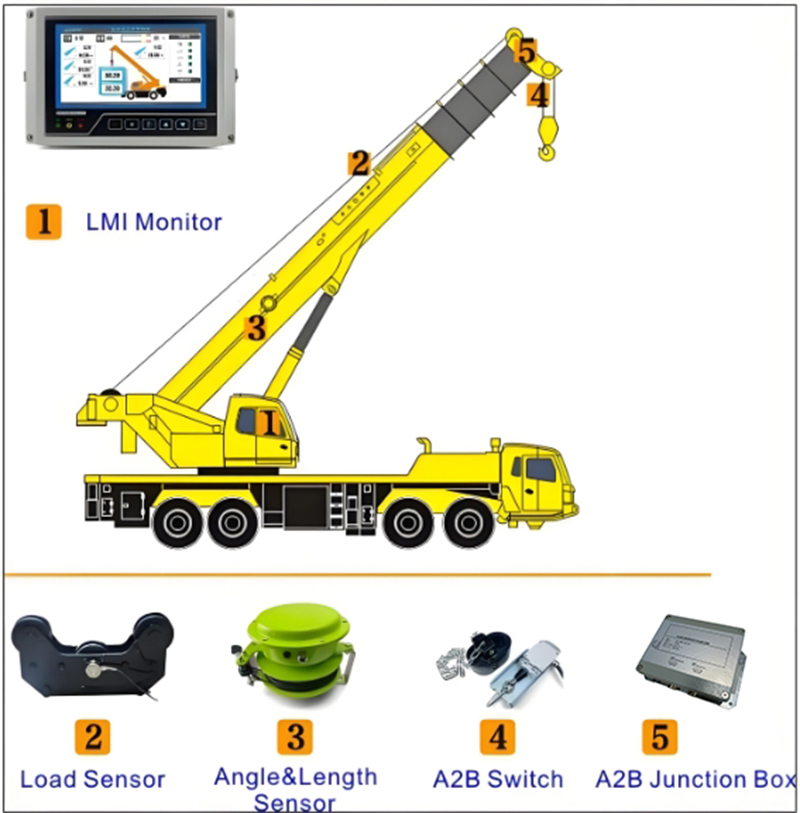
The distinction between an indicator and a limiter is not academic. An indicator that only displays leaves the cut-off decision to the operator; a limiter removes it. We explain the terminology, and how the terms map to LMI, SLI, RCI and RCL, in a separate article (load moment indicators vs load limiters; LMI vs SLI vs RCI vs RCL, with standards).
Choosing a crane overload protection system: a buyer’s checklist
Procurement teams usually compare screens and prices. The questions below decide whether the device actually works on your machine, in your climate, under your inspection regime.
- Which machine, and which load chart? The device must be configured to the actual rated-capacity chart of your machine and configuration, not to a generic curve. Ask who builds and verifies that chart file.
- Indicator or limiter? Decide based on the risk you are controlling — overloading the structure, tipping, or both.
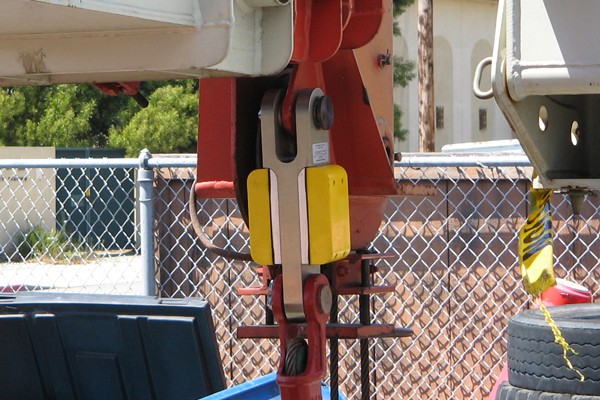
- Which sensing method? Load cell on the rope or sheave, pressure transducers in the hoist cylinders, or a combination; plus angle, length and anti-two-block inputs. The method determines what fails first in your duty cycle (see key sensor indicators for crane LMIs).
- What happens when a sensor fails? A failed input must fail safe and be visible to the operator, not silently ignored. OSHA allows operation with a defective aid only under defined temporary alternative measures and repair windows.
- Will it survive your climate? Heat, dust, vibration, condensation and cable wear decide the service life of the sensors, not the display (see our note on full-environment protection for LMIs and SLIs).
- Does it keep records? Overload events, alarm history and configuration changes are what an inspector — or an insurer — will ask for after an incident.
- Who calibrates it, and how often? Calibration is the single most common source of “the display is lying” complaints (see five common calibration pitfalls).
- What paperwork does your market need? CE documentation for the EU, OSHA Subpart CC alignment for the US, and type-test and registration practice for China. Buying the hardware is the easy part; buying the documents is what gets machines through customs and inspections (see our LMI selection guide).
What the standards require in 2026
United States. OSHA’s Subpart CC requires the listed operational aids to be in proper working order before operations begin, and splits them into two categories with different repair windows: Category I devices — boom hoist limiting device, luffing jib limiting device and anti-two-block device — must be repaired no later than 7 calendar days after the deficiency occurs, while Category II devices — including boom angle or radius indicators and load weighing and similar devices — have a 30-day window, with an exception when parts are documented as ordered within 7 days (29 CFR 1926.1416(b), (d), (e)).
European Union. The Machinery Regulation (EU) 2023/1230 replaces Directive 2006/42/EC from 20 January 2027, with no transitional period between the two. It tightens the treatment of safety components and brings safety-related software squarely into scope — which matters for any load-monitoring device whose behaviour is defined in firmware (Regulation (EU) 2023/1230). We covered the countdown and what it means for lifting equipment separately (EU crane safety compliance tightens in 2026).
China. Under the national criteria for judging major accident hazards in special equipment and the current use-management rules for lifting machinery, a missing or failed load-moment limiter or load-limiting device on lifting machinery is treated as a major accident hazard, and local market-surveillance authorities have been publishing exactly that list in their post-holiday enforcement notices this month (Jinwan district notice).
| Jurisdiction | Instrument | What it means for load-monitoring devices |
|---|---|---|
| United States | OSHA 29 CFR 1926 Subpart CC | Load weighing, LMI or limiter required by manufacture date and capacity; 7-day / 30-day repair windows for defective aids |
| European Union | Machinery Regulation (EU) 2023/1230 | Applies from 20 January 2027; safety components and safety-related software face stricter conformity routes |
| China | Major-hazard criteria and special-equipment use rules | Missing or failed moment / load limiters on lifting machinery = major accident hazard; stop use and rectify |
For a side-by-side comparison of how the EU, US and Chinese frameworks treat load moment indicators, see our global crane safety standards analysis.
Five field faults that make the display lie
Most “the device is broken” calls we hear are not failures of the processor. They are failures of an input, a configuration, or a calibration — and they show up as readings that no longer match reality.
| Symptom | Likely cause | First check |
|---|---|---|
| Load reading drifts or jumps while the machine stands still | Pressure transducer drift, moisture in a connector, damaged cabling | Inspect wiring and connectors near the boom hinge before condemning the sensor |
| Radius or boom angle does not match a tape measure | Length-sensor cable stretched or misaligned; angle sensor loose | Re-measure at two known radii and compare against the display |
| Alarm triggers at loads the paper chart says are fine | Wrong load chart loaded, attachment or outrigger configuration not set | Confirm the chart file and the configuration actually match the machine as set up today |
| Device switched off, bypassed or “temporarily disabled” | Deliberate defeat — the most dangerous fault on this list | Treat as out of service; under OSHA rules a defective aid needs alternative measures and repair, not a switch |
| Display works but the motion never cuts on limiter versions | Cut-off valve circuit or wiring problem | Test the cut path on the ground; a limiter without a working cut path is only a display |
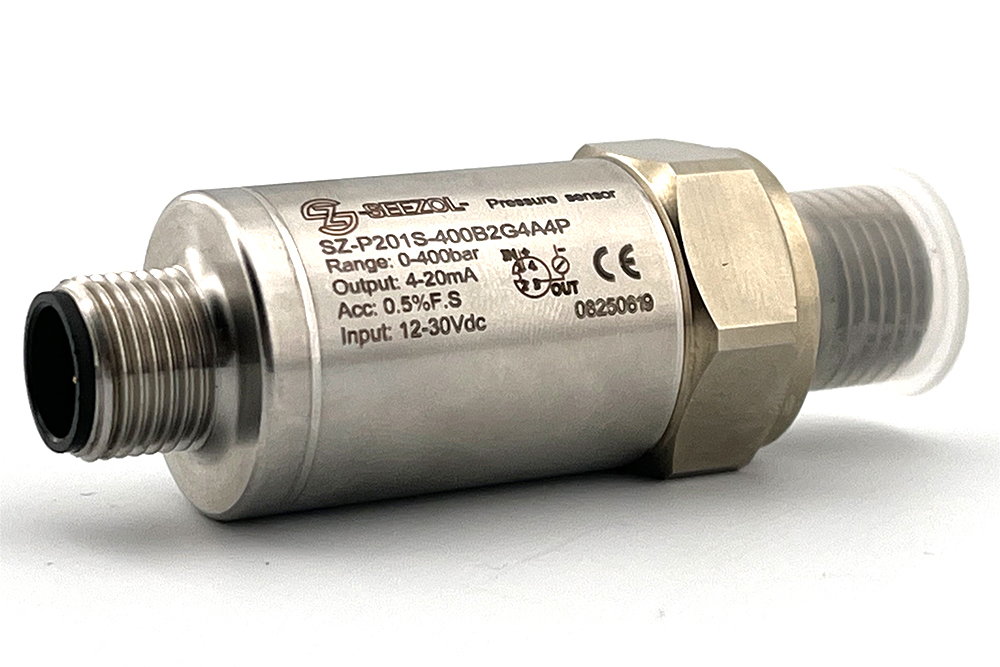
Installation quality sits behind most of these symptoms. Our oil pressure sensor installation guide for LMIs and onboard weighing systems covers the mounting and routing details that decide whether the readings stay stable after month three.
What these devices cannot do
This is the part of the article we care about most, because overselling is how safety equipment loses credibility.
- They do not validate the ground. A monitor can report outrigger extension — OSHA requires such sensors on newer equipment — but no load-monitoring device assesses soil bearing capacity or the adequacy of crane mats and pads.
- They do not secure the load. Slinging, tag lines, exclusion zones and blind-lift procedures remain human work. The Bow case is, on the prosecution’s account, a lifting-plan failure, not a weighing failure.
- They do not replace judgement. OSHA says this verbatim: safety devices and operational aids “must not be used as a substitute for the exercise of professional judgment by the operator” (29 CFR 1926.1417(k)).
- They do not prevent two-blocking by themselves. That is the job of a separate anti-two-block device, which is why it sits in the stricter repair category.
- They do not know the weight before pickup unless a load weighing device is fitted and actually used to verify it before the lift.
A ten-minute routine for the day the machine returns to work
Every enforcement notice published this month says the same thing in different words: most defects are found, or missed, at the start of a shift. After a holiday break, a transport move or a storm, the routine below costs minutes and catches the faults that later become incidents.
- Check the display powers up and shows no active fault codes.
- Confirm zero with the hook block and rigging hanging free.
- Lift a load of known weight and compare the reading; if the machine has a weighing function, use it.
- Walk the sensors: mountings tight, cables not chafed, connectors dry.
- On limiter versions, confirm on the ground that the cut-off actually cuts.
- Record what you checked and what you found — the record is what turns a routine into evidence.
OSHA also requires the competent person to adjust equipment and operations for the effect of wind, ice and snow on stability and rated capacity, and to determine whether manufacturer securing recommendations apply when a local storm warning has been issued (29 CFR 1926.1417(h), (n)). After the week the port of Guam has just had, that paragraph is worth re-reading even if your site is nowhere near a typhoon track.
Frequently asked questions
Our alarm triggers while the load is still on the ground. Is the device broken?
Not necessarily. The hook block, slings and any stuck or adhering material are already in the reading, and if the radius is large, the allowed load at that radius may be lower than the combination being lifted. Bring the hook in or move the machine closer and watch the reading change.
Is an LMI the same as a load limiter?
No. An indicator measures, compares and displays; a limiter does all of that and also cuts the motions that would exceed the chart. The distinction, and the terms SLI, RCI and RCL, are unpacked in our terminology article.
We run older machines with no device at all. What should we retrofit first?
Start with the machines that carry the heaviest loads at the largest radii, and with any machine whose load chart depends on configuration the crew can change in the field. If you are unsure where the line between indicator and limiter sits for your fleet, our truck-crane upgrade note walks through the trade-offs.
Where to start
The devices at the centre of this week’s incidents are not exotic. They are mature, widely required, and mostly let down by configuration, calibration or bypass rather than by electronics. That is good news for buyers: the difference between a system that protects and one that decorates the cab is process, not luck.
If you are reviewing your fleet’s load-monitoring setup — whether for cranes, excavators, loaders or material handlers — start with our safety solutions overview and weighing and measurement solutions, or read the excavator LMI introduction and our tower crane LMI solution. You can also send us your machine model and load chart, and we will tell you plainly what a retrofit can and cannot do.