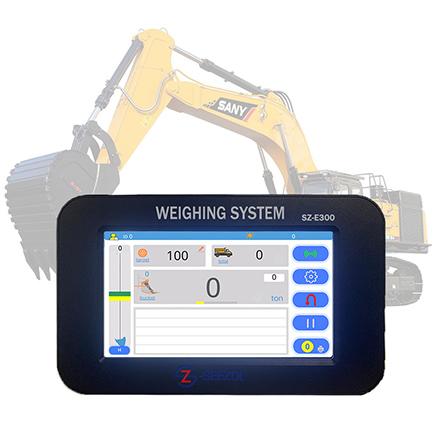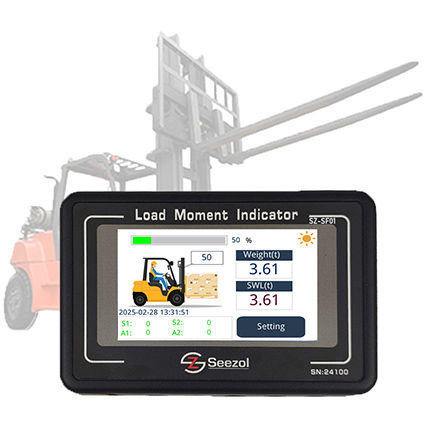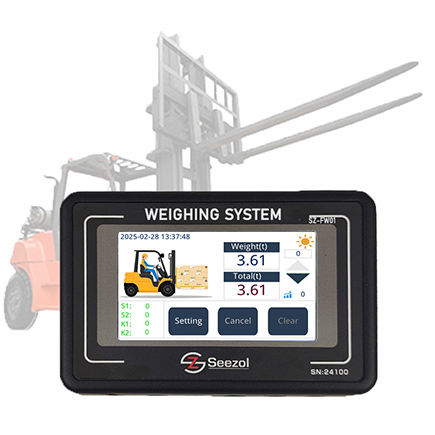
Dans le monde des machines lourdes, les Indicateur de moment de charge (LMI) est le héros méconnu, l'"ange gardien" de votre grue. Il détermine non seulement l'efficacité opérationnelle, mais aussi la sécurité de l'ensemble du chantier. Pourtant, nous entendons souvent les mêmes frustrations de la part des opérateurs et des gestionnaires de flotte : "L'alarme continue de se déclencher alors que je ne suis même pas en surcharge" ou "Le poids indiqué est complètement différent de la réalité".
La réaction immédiate est souvent de blâmer le matériel : "Cet appareil est bon marché ; le capteur doit être cassé". Cependant, d'après notre expérience, le coupable est rarement la qualité de fabrication. Le plus souvent, il s'agit de les habitudes d'utilisation et les oublis d'étalonnage. Passons au crible les 5 erreurs les plus courantes qui nuisent à la précision, afin de vous aider à résoudre les problèmes avant de faire appel à un remplaçant.
La surveillance de la "dérive zéro

De nombreux opérateurs commencent à lever immédiatement après l'allumage, sans tenir compte de la vérification du "zéro". Si votre IMT indique 0,1t ou -0,05t lorsque le crochet est vide, tous les poids suivants sont calculés sur une base erronée. Cette "dérive du zéro" aggrave les erreurs. Une dérive positive provoque des alarmes intempestives qui nuisent à la productivité ; une dérive négative est dangereuse, car elle masque les surcharges réelles.
La solution : Avant chaque période de travail, assurez-vous que le crochet est mis à la terre et vide. Si l'écran n'est pas à zéro, effectuez immédiatement un "étalonnage du zéro".
Se tromper de "maths" : le mouflage des câbles métalliques
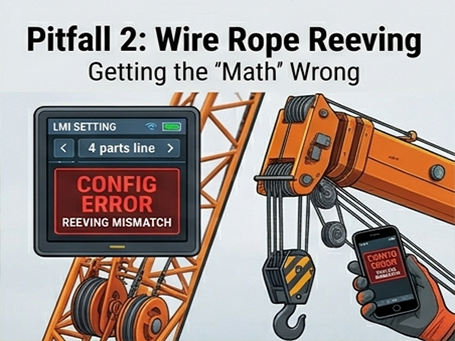
L'IMT calcule la charge en combinant les signaux des capteurs et les paramètres physiques. Le "Reeving" (nombre de pièces de la ligne) est essentiel. Les opérateurs modifient souvent la hauteur des blocs ou la configuration des poulies pour s'adapter à un levage, mais oublient de mettre à jour le réglage sur le moniteur.
La solution : Si vous modifiez la configuration physique de vos poulies, vous devez mettre à jour le réglage de l'enroulement sur l'écran. Si le système pense que vous avez 2 lignes alors que vous en avez 4, le calcul est erroné et la marge de sécurité disparaît.
Traiter l'électronique de précision comme du fer
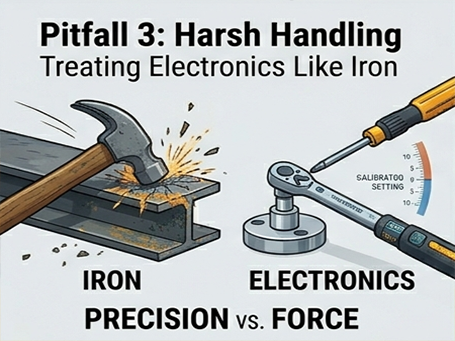
Les chantiers de construction sont difficiles. Il est tentant d'appuyer sur un bouton collant ou de frapper sur un moniteur qui semble gelé. De même, une erreur fréquente consiste à trop serrer les boulons des capteurs lors de l'installation.
La solution : Traitez l'IMT comme un ordinateur portable et non comme un marteau. Lors de l'installation de broches de charge ou de capteurs, utilisez une clé dynamométrique. Une force inégale peut déformer de façon permanente la structure interne du capteur, ce qui nuit à sa linéarité.
Ignorer les éléments : L'eau et la chaleur

Un câble effiloché enveloppé dans du ruban adhésif n'est pas étanche. En outre, le fait d'opérer dans des conditions de chaleur extrême (comme dans les aciéries) sans vérifier les températures nominales peut fausser les résultats. L'humidité provoque des courts-circuits de signal (sauts de chiffres), tandis que la chaleur extrême modifie l'élasticité du métal, ce qui perturbe le capteur.
La solution : Inspectez régulièrement les presse-étoupes et les connecteurs. Assurez-vous que l'indice IP de votre appareil correspond à votre environnement.
La mentalité du "prêt à l'emploi" : c'est la cause la plus silencieuse de la perte de précision.

Avec le temps, l'usure du câble et les changements hydrauliques modifient la ligne de base du système. Une IMT qui était parfaite il y a six mois peut maintenant être décalée de 5-10%.
La solution : Prévoyez un "bilan de santé". Nous recommandons un étalonnage de la charge avec des poids standard tous les 3 à 6 mois.
La précision, c'est le respectUne IMT imprécise n'est pas seulement une gêne, c'est un risque. Souvent, le dispositif n'est pas "cassé" - il a simplement besoin d'être entretenu correctement. En évitant ces cinq pièges, vous vous assurez que le système de sécurité de votre grue vous protège réellement. Si vous avez vérifié ces points et que vos relevés sont toujours erratiques, contactez-nous. Nous sommes là pour vous aider à retrouver un levage sûr et précis.