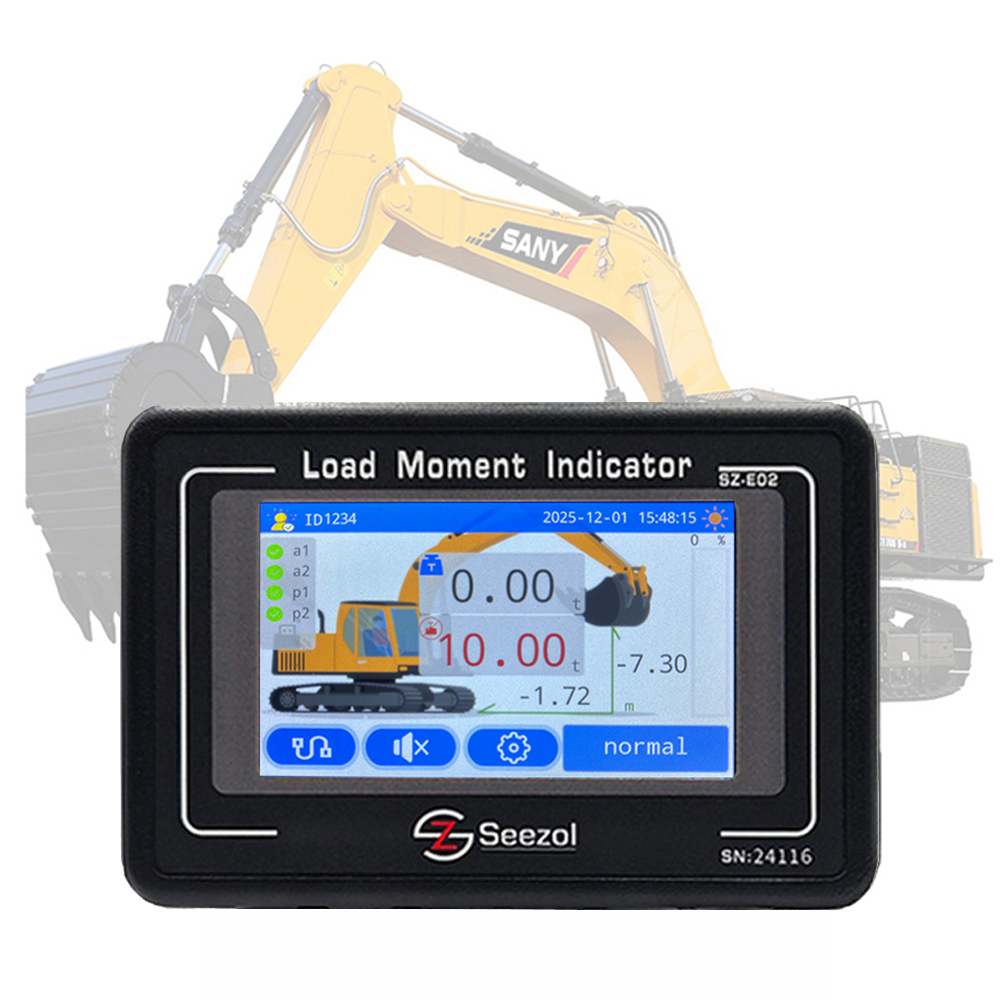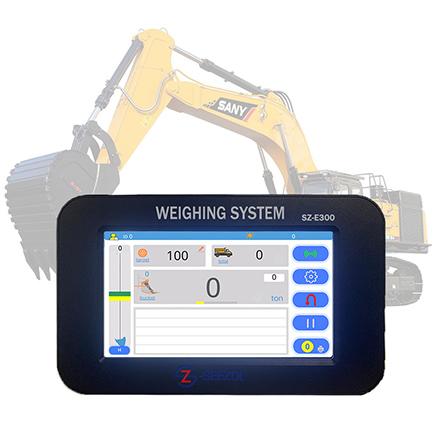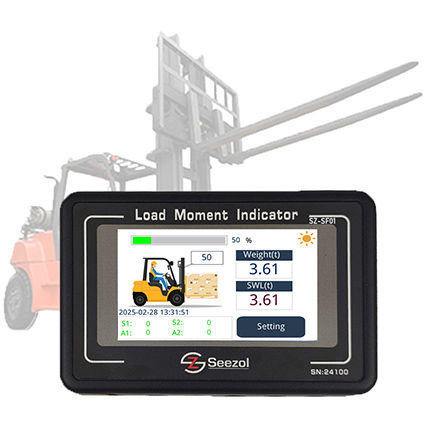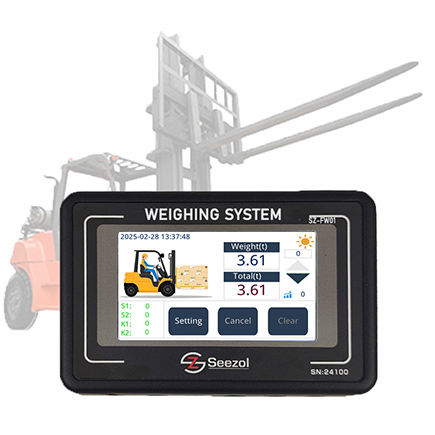
Раскрытие информации о заинтересованности: This article is published by SeeZol (szlmi.com), a manufacturer of load moment indicators (LMI), safe load limiters and onboard weighing systems for construction machinery. We sell the equipment discussed below, so we have a commercial interest in the conclusions. We have kept the line between fact and sales talk visible: we describe what each device is designed to do and the direction in which it acts, we do not quote accuracy, capacity or response-time figures for any model, and — in a dedicated section — we list what these devices cannot do. One of the incidents described contradicts an account we published on 10 October 2026; we correct our own record below rather than leave it standing.
Five days, four incidents, one blind spot
At about 3:10 p.m. on 9 October, at a power plant construction site in Bucheon, Gyeonggi Province, South Korea, a counterweight being hoisted into place on a tower crane swung and struck workers who were installing the counterweight blocks. A 58-year-old tower crane worker was taken to hospital in cardiac arrest and died; another 58-year-old worker was seriously injured. The Bucheon office of the Ministry of Employment and Labor ordered work to stop and is investigating, including whether the Occupational Safety and Health Act and the Serious Accidents Punishment Act were violated (Seoul Economic Daily; SBS News).
On 10 October, in Permatang Tinggi, Bukit Mertajam, in Malaysia’s Penang state, a crane parked at an elderly care home toppled onto the roof of a residents’ building. The Penang Fire and Rescue Department said the crane was believed to have overturned after losing stability while parked on uneven ground. An 84-year-old resident suffered head injuries and was taken to hospital; the other 37 residents and 11 workers, including the crane operator, were unharmed (The Star; The Vibes). The department’s account is an initial assessment; no cause has been confirmed.
The third incident is the one we got partly wrong. On 8 October a truck crane overturned in Shenzhen’s Bao’an district while hoisting cable tray during rooftop solar work. Our 10 October article repeated the owner’s account, reported the same day, that the load was overweight. On 10 October, Southern Metropolis Daily published a site revisit quoting the industrial-park management: the tray section being lifted weighed less than 250 kg (500 jin), and the driver had not extended the truck crane’s outriggers or set up auxiliary support before lifting. A 50-tonne-class crane, by that account, was tipped over by a quarter-tonne load (Southern Metropolis Daily via NetEase; The Beijing News, 8 October, owner’s account). The two accounts are contradictory and neither is an official finding; we present both and draw no conclusion beyond what each source claims.
Across 8–9 October, Chinese market-surveillance authorities continued post-holiday enforcement. Chengdu’s Xindu district published the 85th instalment of its hazard-exposure series: a rail-equipment plant was found with a missing or failed emergency-stop and a missing or failed rated-capacity limiter — both classified as major accident hazards — and was ordered to stop using the crane, repair and re-test (Xindu District Market Supervision, via NetEase). Guangdong’s special-equipment inspection institute travelled to Guizhou to re-verify the moment limiters and load limiters of tower cranes on a highway project (China Quality News).
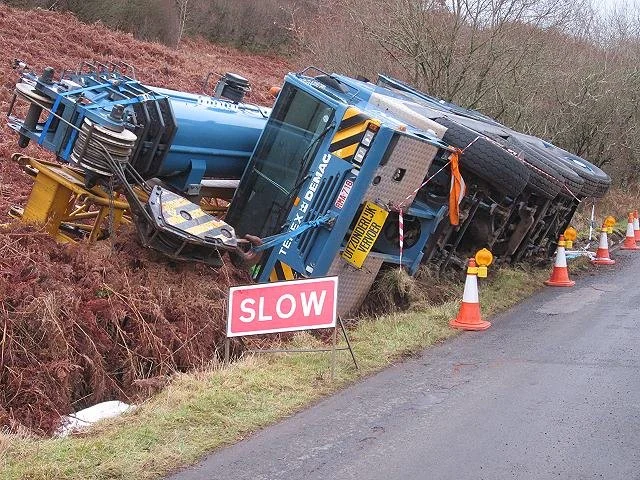
Four items, three countries, five days. A counterweight that was being installed rather than a load being lifted; a machine that tipped while parked; a machine that tipped with almost nothing on the hook; and a regulator treating a dead limiter as a major hazard. What connects them is not the weight of the load. It is the state of the machine: what it was standing on, what was rigged to it, and whether anyone — or any device — was watching that state.
What crane stability monitoring actually watches
A crane’s limit is a moment limit, not a weight limit. The overturning moment at the base is produced by the load times its radius — and resisted by the machine’s own weight, its counterweight, and the support the ground and the outriggers provide. Change any of those and the same load moves from safe to unsafe without the load itself changing at all. This is why crane stability monitoring is a broader job than load indication: the system has to know the load, but it also has to know the configuration the load is acting against.
In practice that means four families of inputs:
- The load. Measured at the rope, at a sheave, or through pressure transducers in the hoist cylinders. This is the input most systems get right, and the only one the Shenzhen incident did not need — the load was light (see how to select a weight sensor for a crane limiter).
- The geometry. Boom angle, boom length or radius, and — for machines with outriggers or stabilizers — whether those beams are actually extended and set. OSHA treats the outrigger/stabilizer position sensor as a listed operational aid in its own right, a point the standards section below returns to.
- The ballast and the chart. The rated-capacity chart in the controller must match the counterweight and rigging configuration actually fitted. A chart selected for full counterweight is a different, more generous machine than the one standing on the site.
- The ground. Firmness, level and bearing capacity under the pads, crawlers or tyres. OSHA defines “ground conditions” and bars assembly or use unless they are adequate; some modern crawler cranes now calculate and display live ground pressure against a limit the operator enters for the site.
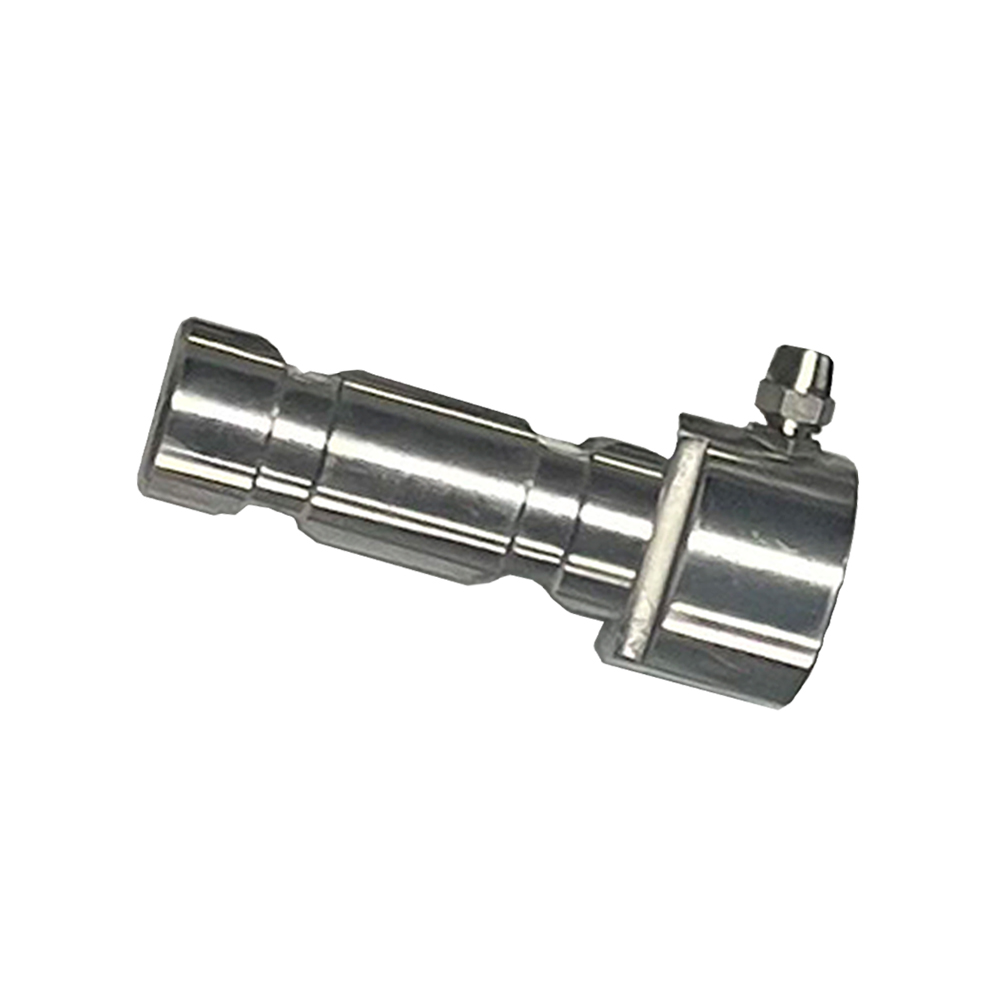
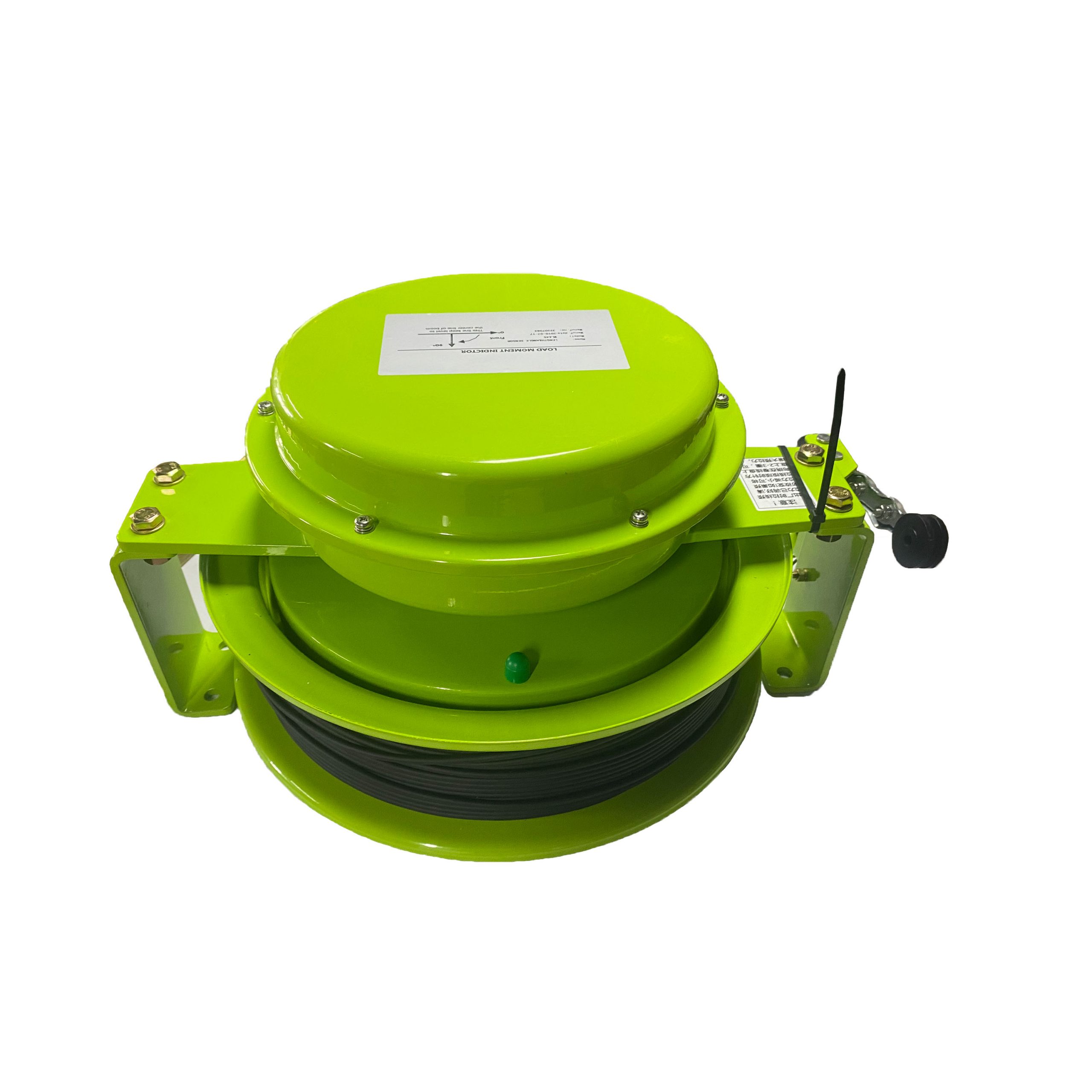
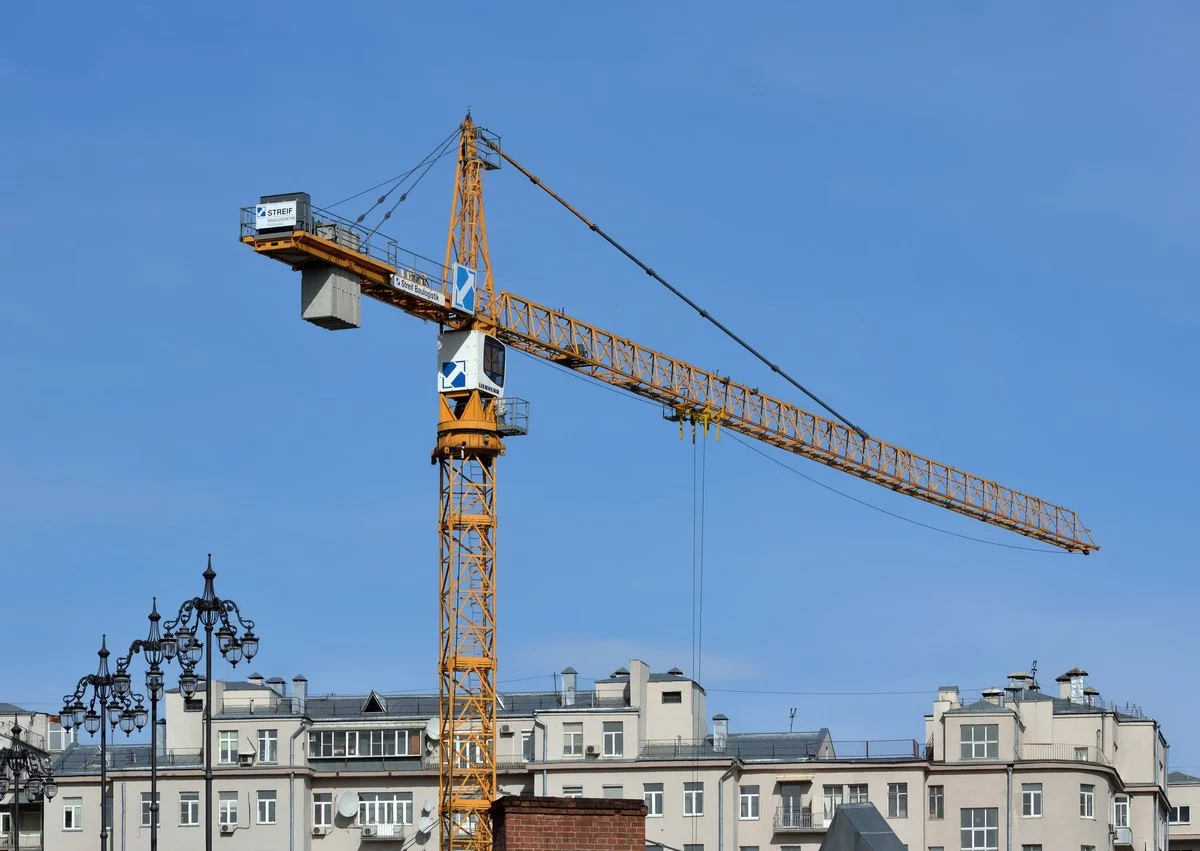
The counterweight is the same story from the other side. A tower crane’s counter-jib ballast balances the load moment; hoisting a counterweight block into place, as in the Bucheon accident, means suspending tonnes of ballast from the very machine whose balance is not yet complete. Lifting and installing ballast is a documented high-risk operation precisely because the machine is temporarily outside the configuration its own chart assumes.
What the standards require in 2026
United States. OSHA’s Subpart CC is unusually explicit about the machine’s own state. Ground conditions are defined as “the ability of the ground to support the equipment (including slope, compaction, and firmness)”, and the equipment “must not be assembled or used unless ground conditions are firm, drained, and graded to a sufficient extent” to meet the manufacturer’s specifications for support and level (29 CFR 1926.1402(a)(1), (b)). On the hardware side, equipment with outriggers or stabilizers manufactured after 8 November 2011 must have an “outrigger/stabilizer position (horizontal beam extension) sensor/monitor”; if that device is defective, the temporary alternative measure is that “the operator must verify that the position of the outriggers or stabilizers is correct … before beginning operations requiring outrigger or stabilizer deployment” (29 CFR 1926.1416(e)(5)(i)). As a Category II operational aid it carries a 30-calendar-day repair window, with an exception when parts are documented as ordered within 7 days.
European Union. The Machinery Regulation (EU) 2023/1230 applies from 20 January 2027 and replaces Directive 2006/42/EC with no transitional period between them. Software with a safety function counts as a safety component, and Annex III requires protection against corruption of the software and data that keep a machine safe. For a monitoring device whose configuration logic lives in firmware, the regulation pushes exactly in the direction these incidents argue for: the machine’s set-up state must be part of the safety function, and it must not be silently editable (Regulation (EU) 2023/1230; see our EU compliance countdown).
China. GB 45067-2024, the mandatory national standard for judging major accident hazards in special equipment, has been in force since 1 December 2024 (SAMR announcement). For lifting machinery, a missing or failed rated-capacity limiter or load-moment limiter is a major accident hazard, and district-level enforcement notices have spent this month repeating precisely that item, ordering stop-use and rectification (Xindu district exposure notice; cross-provincial verification of moment and load limiters). For how the devices themselves must be installed and verified, see our note on LMI installation per GB/T 12602-2022.
| Jurisdiction | Instrument | What it requires about the machine’s own state |
|---|---|---|
| United States | OSHA 29 CFR 1926 Subpart CC (1926.1402; 1926.1416) | Ground must meet manufacturer support and level specs; outrigger/stabilizer position sensor required on post-2011 machines; 30-day repair window for Category II aids |
| Европейский союз | Machinery Regulation (EU) 2023/1230 | From 20 January 2027: safety software is a safety component; protection against corruption of safety data and set-up configuration |
| Китай | GB 45067-2024 + enforcement notices | Missing or failed rated-capacity / moment limiter = major accident hazard: stop use, rectify, re-inspect |
For a side-by-side reading of how the three frameworks treat load-moment devices generally, see our global crane safety standards comparison.
The direction of travel is also visible in OEM product design. Liebherr’s LR 1300.1 SX crawler crane, for example, pairs boom- and jib-mounted wind sensors with a Ground Pressure Visualization function that calculates the machine’s live ground pressure and compares it against a site-specific limit, and drives with load on the hook only in a “Safe Mode” with the load moment limiter active (Liebherr product documentation). We cite this as a technical reference, not as news: it shows where the category is heading — from measuring the load to monitoring the machine.
Four field faults that make a stable machine tip
Most stability failures we hear about are not sensor failures. They are configuration failures: the device is working, but it is working on an assumption nobody verified. The four patterns below cover most of the “the display said we were fine” calls.
| Symptom | What is actually wrong | First check |
|---|---|---|
| Reading fine at a light load — machine tips anyway (the Shenzhen pattern) | Outriggers or stabilizers not extended or not set; the controller is computing against a configuration that does not exist on the ground | Walk the machine: beams extended, pads on prepared bearing, machine levelled — before trusting any readout |
| Capacity shown does not match the chart book | Wrong load chart or configuration file selected; counterweight or parts-of-line entered does not match what is fitted | Confirm the chart file, the counterweight and the rigging configuration against the machine as it stands |
| Alarm at loads the chart allows, or silence where it should alarm | Calibration drift or a failed geometry input: the load input may be right while angle or length is not | Re-measure radius at two known points and compare against the display (see five calibration pitfalls) |
| Device bypassed, defeated or “temporarily disabled” | Deliberate defeat — the most dangerous fault on this list, and the one regulators now treat as a major hazard | Treat the machine as out of service; a defective aid needs the defined alternative measures and repair, not a switch |
For deeper fault-finding on the indicator itself, see our LMI fault handling and prevention guide, and for articulated-boom machines a dedicated troubleshooting guide for knuckle-boom LMI.
A buyer’s checklist for stability-aware monitoring
If the machine’s state is half the risk, procurement should test for it as deliberately as it tests the load input. Seven questions, in the order we would ask them:
- Does it sense outrigger or stabilizer position? On machines with outriggers this is the single highest-value input after the load itself, and on US-market machines built after November 2011 it is a listed requirement, not an option.
- Is the load chart matched to the actual configuration? Ask who builds the chart file, how counterweight and parts-of-line variants are handled, and how the file is verified after a configuration change.
- Does a failed input fail safe and visibly? A missing outrigger signal must never default to “assume fully extended”. Ask the vendor what the system does when an input drops out.
- Does it record what it saw? Configuration changes, overload events and alarm history are what an investigator — or an insurer — will ask for. Without records, the device cannot testify for you.
- What is the alarm and cut-off logic? Warn, restrict, cut: the sequence and the thresholds must be documented, and the cut path tested on the ground before hand-over.
- Who calibrates it, and against what? Calibration covers geometry as much as load; a display that is accurate in the shop can still lie about a machine that is set up wrong (see how to verify LMI compliance with applicable standards).
- Does it suit the machine class? Input packages differ across truck cranes, crawlers, tower cranes and material handlers; a crawler buyer should be asking about ground-pressure and inclination inputs rather than outrigger beams (see Как выбрать LMI для вашего станка).
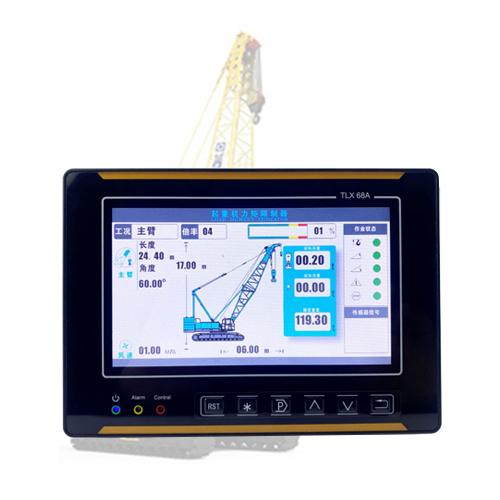
Two of this week’s incidents also land close to machines and markets we serve: our 30-tonne weighing system commissioned in Malaysia and our excavator LMI work with Petronas are both in the region where the Penang tip-over happened. Buyers there, as everywhere, tend to ask about load accuracy first; the events above argue for asking about configuration sensing just as early. For an overview of what we manufacture, see our safety solutions и weighing and measurement solutions.
What these systems cannot do
A monitoring device is a measuring and warning layer, not a substitute for ground preparation, lift planning or supervision. Stating the limits plainly:
- It does not prepare the ground. No sensor firms up soft soil, levels a slope or lays mats. OSHA places that duty on the controlling entity and the operator’s employer, and no retrofit device removes it.
- It does not verify its own configuration. If the chart file, counterweight entry or outrigger setting entered into the system is wrong, the device will faithfully compute against the wrong assumption. Detection is not validation.
- It does not replace the pre-lift walk-around. The regulatory fallback for a defective outrigger sensor is a human checking beam position — that fallback exists because a sensor can fail exactly when it is most needed.
- It cannot see every hazard. Swing path, personnel below the load, wind at boom-tip height, buried voids under a pad: several of the risks in this week’s incidents sit outside any load-moment calculation.
- It does not make a machine legal. Compliance also requires correct chart documentation, operator competency, inspection records and, in some markets, type-test certificates. A device is one document in a thicker file.
Sources and further reading
Primary and press sources used above: Seoul Economic Daily и SBS News on the Bucheon counterweight accident; The Star и The Vibes on the Penang tip-over; Southern Metropolis Daily и «Пекинские новости» on the Shenzhen overturn; Xindu district market supervision и China Quality News on Chinese enforcement; 29 CFR 1926.1402 и 29 CFR 1926.1416 as the cited US rule text; Regulation (EU) 2023/1230; the SAMR notice on GB 45067-2024; and Liebherr’s LR 1300.1 SX documentation as a technology reference. For background on the machine-configuration theme in a prosecution context, Australia’s Comcare charged the Department of Defence in late September over a 2024 crane tip at HMAS Stirling in which outriggers were retracted, the boom extended and the counterweight too heavy for the set-up (Comcare statement); that matter is before the Perth Magistrates Court on 27 November 2026 and is reported here as an allegation only.
Related reading on this site: crane overload protection: lessons from October 2026 (the article whose Shenzhen account this piece corrects), lessons from the Fort Lauderdale crane failure, Индикаторы момента нагрузки и ограничители нагрузки, and our purchase guide for LMIs and weighing systems.
Fact-checking note: the Bucheon, Penang and Shenzhen accounts are based on official statements and press reporting available as of 12 October 2026; none of the three incidents has a published final cause. Where two sources contradict (Shenzhen), both accounts are given with their attribution. No accuracy, capacity or response-time figures for any device are quoted in this article.