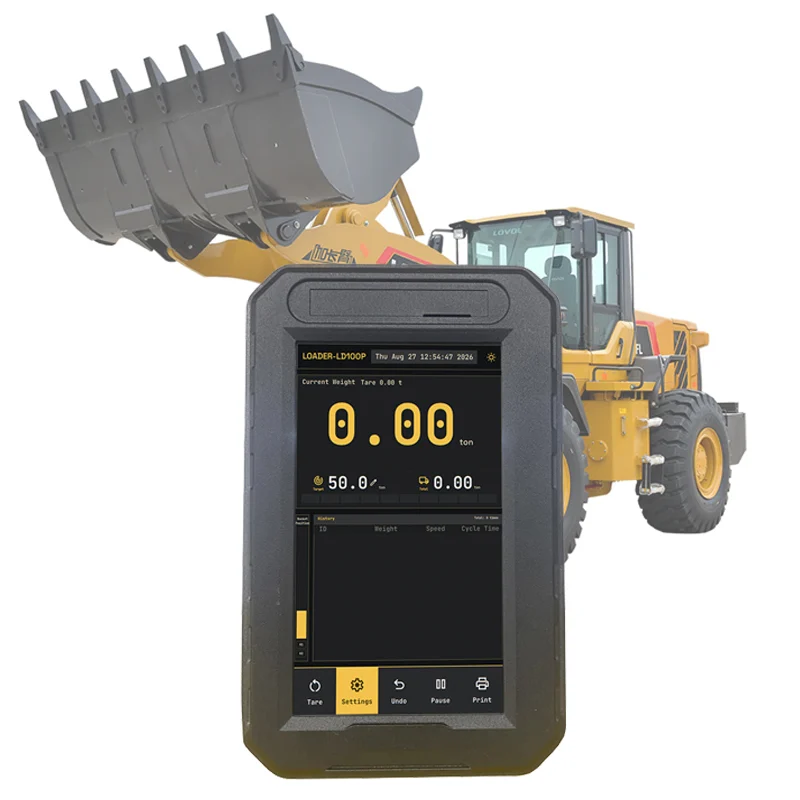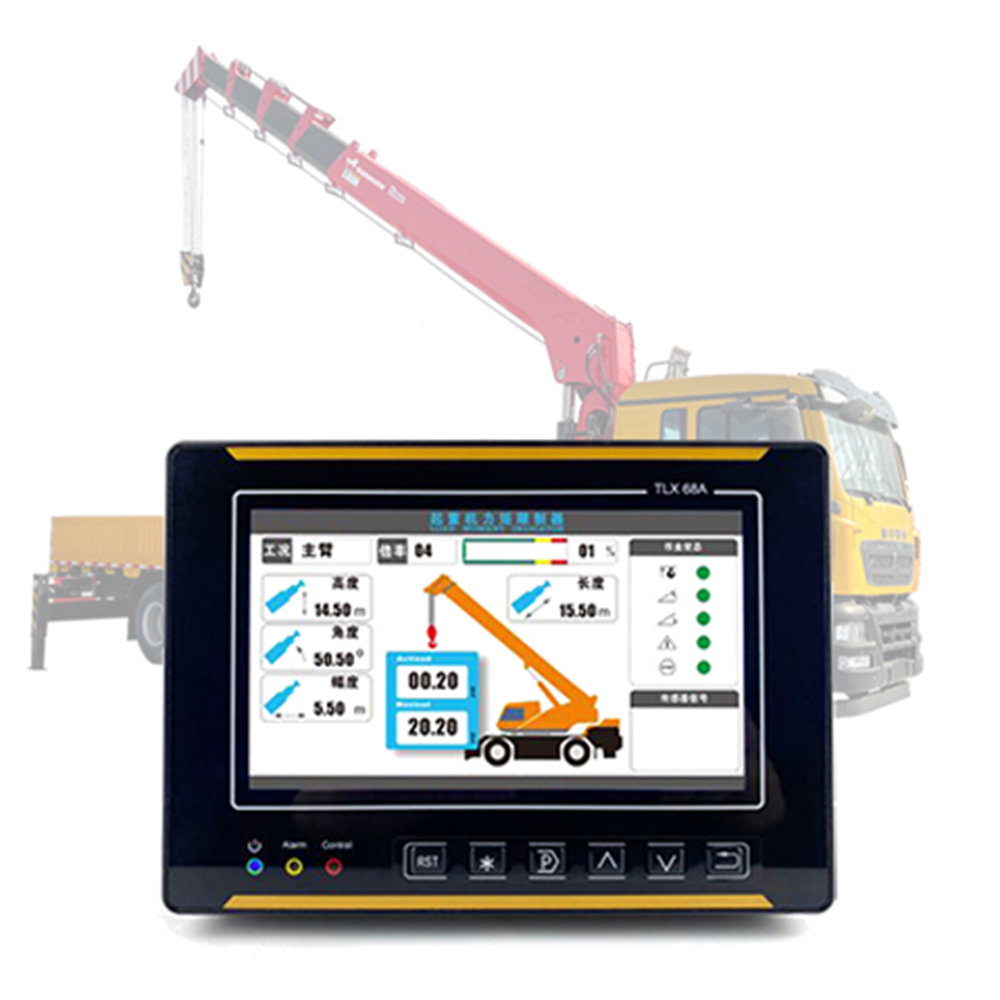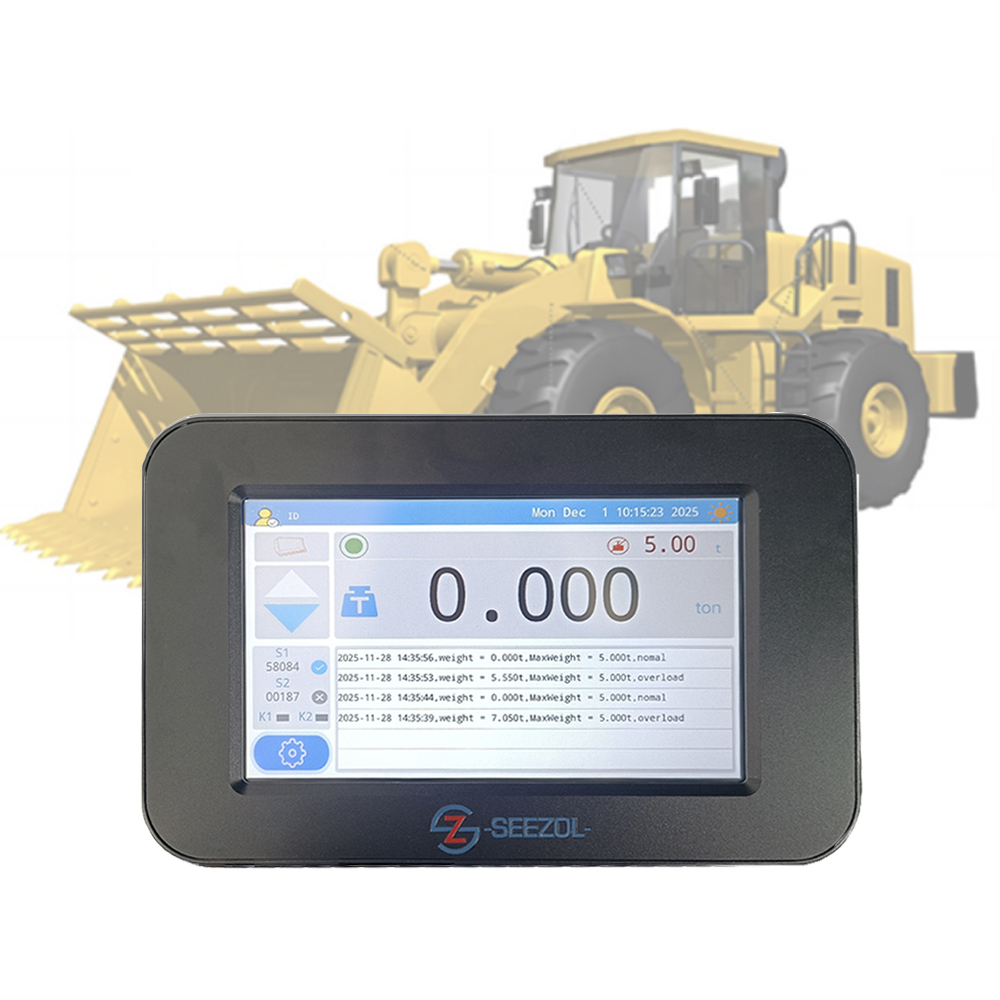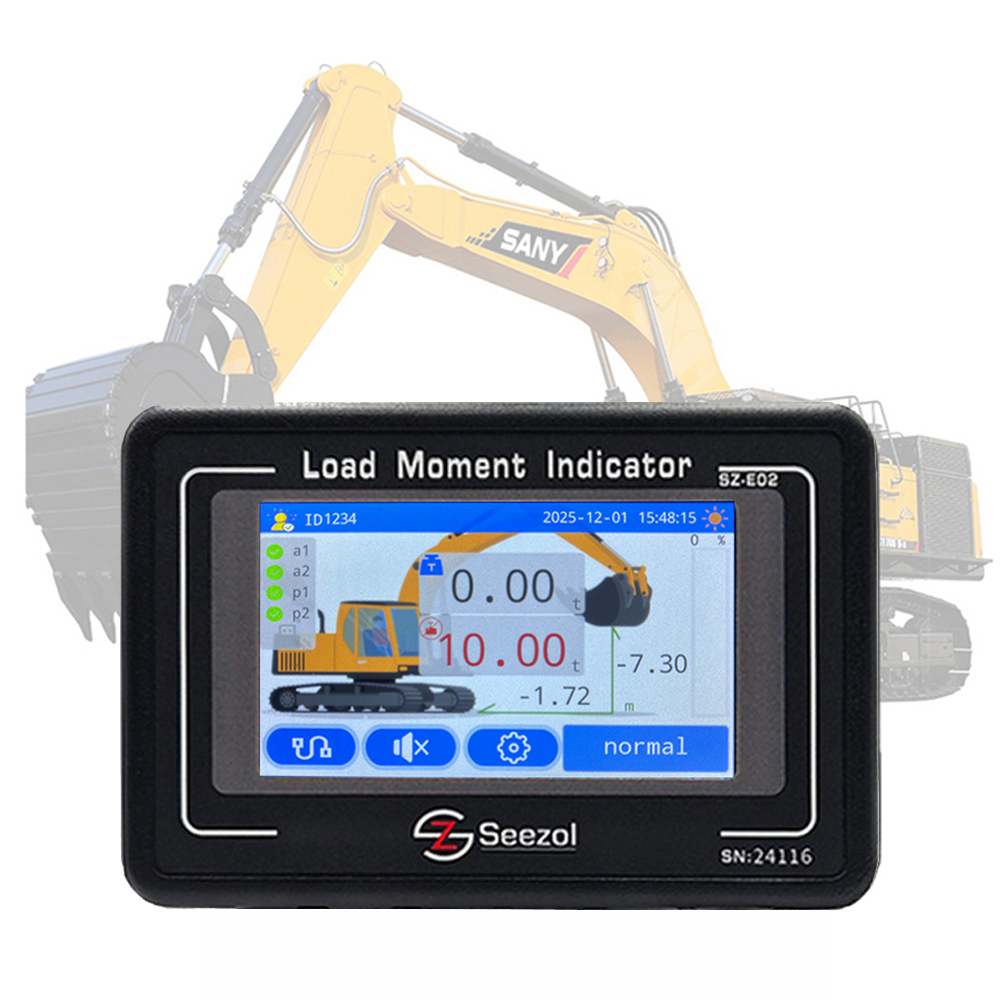
Autor: Editado pelo departamento técnico da SeeZol, uma empresa de integração de sistemas de segurança industrial com vasta experiência prática na seleção de equipamentos SLI/LMI para empilhadores, carregadores e escavadoras.
Data de publicação: 17 de julho de 2026 · Data da última revisão: 17 de julho de 2026
Aviso legal: Quaisquer sugestões, limites de especificações ou classificações apresentadas neste artigo são independentes dos fornecedores.
Resumo
A Indicador de carga segura (SLI) é um dispositivo de segurança para monitorização do peso em tempo real utilizado em máquinas de construção — empilhadores, carregadoras, escavadoras e equipamento semelhante — que compara a carga atual com a carga nominal de segurança da máquina e aciona alarmes por fases (e, em alguns modelos, o desligamento automático) à medida que esse limiar é atingido ou excedido. É a versão mais simples do Indicador de Momento de Carga (LMI): um SLI monitoriza apenas o peso, enquanto um LMI calcula o peso multiplicado pelo raio de trabalho para equipamentos como gruas, que precisam de monitorizar um raio de trabalho variável. Na hora da compra, os parâmetros mais importantes são a precisão de medição (±2–3% para nível industrial), a proteção contra a penetração (IP65, no mínimo, para utilização no exterior), o tempo de resposta (≤200 ms) e a lógica de alarmes por fases — e não apenas o preço mais baixo indicado na ficha técnica.
Índice
- O que é um SLI — e em que difere de um LMI
- Componentes principais e princípio de funcionamento
- Onde é que o SLI é realmente utilizado
- Lista de verificação para a compra: parâmetros essenciais a comparar
- Certificações e normas sobre as quais se deve informar junto de um fornecedor
- Instalação e Manutenção
- Notas de campo: Padrões comuns de falha
- Erros comuns na compra
- Perguntas frequentes
- Sobre este artigo
1. O que é um SLI — e em que difere de um LMI
A Indicador de carga segura (SLI) é um dispositivo de segurança industrial que mede, em tempo real, o peso efetivo exercido sobre o componente de suporte de carga de uma máquina, compara-o com a carga nominal de segurança dessa máquina e emite um alarme sonoro e visual em fases — e, em alguns modelos, um sinal de desligamento automático — à medida que a carga se aproxima ou excede essa carga nominal.
A distinção que as pessoas confundem com mais frequência:
| SLI (Indicador de carga segura) | LMI (Indicador do momento de carga) | |
|---|---|---|
| O que mede | Apenas o peso da carga | Peso da carga × raio de trabalho (o «momento» total) |
| Equipamento típico | Empilhadores, carregadores, máquinas com garra — percursos de carga fixos ou de eixo único | Guindastes e outros equipamentos com raio de ação variável |
| Por que é que esta diferença é importante | A capacidade de carga segura de uma empilhadeira não varia com o alcance, ao contrário do que acontece com uma grua; por isso, o peso por si só é um indicador de segurança suficiente | Uma grua pode levantar com segurança uma carga pesada num raio curto e levantar a mesma carga de forma insegura num raio longo — o peso, por si só, não é suficiente |
Não são intercambiáveis e a aquisição de um equipamento da categoria errada para o seu equipamento (um SLI num guindaste que realiza elevações de raio variável, por exemplo) deixa uma lacuna real na monitorização.
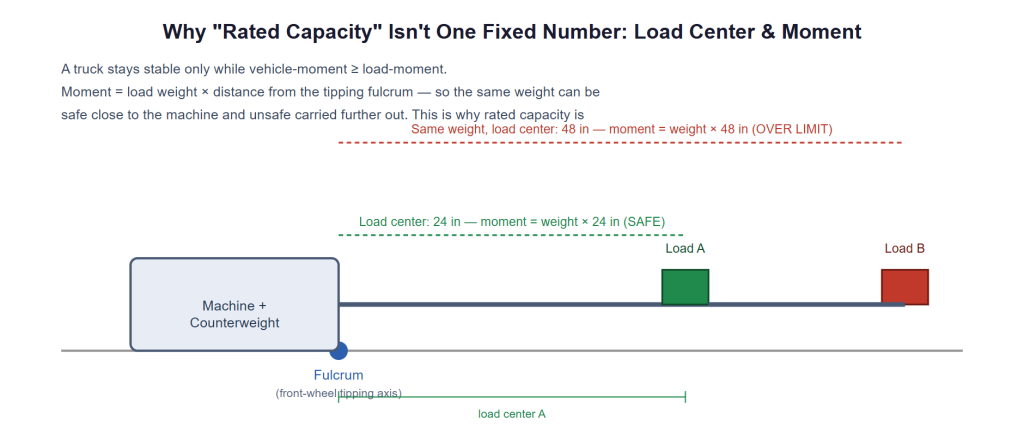
Vale a pena referir que mesmo uma máquina de percurso fixo, como um empilhador, não tem um único limite de peso fixo — as entidades reguladoras definem a capacidade nominal em relação a um «centro de carga» específico (a distância horizontal entre a face do garfo e o centro de gravidade da carga), uma vez que uma carga transportada mais afastada nos garfos gera, efetivamente, um momento de tombamento maior do que o mesmo peso transportado mais próximo. Um SLI que apenas compara o peso bruto com um único valor, sem ter em conta a posição da carga, é uma simplificação — um sistema verdadeiramente bem especificado tem isto em conta, tal como fazem as normas de segurança subjacentes (ver Secção 5).
2. Componentes principais e princípio de funcionamento
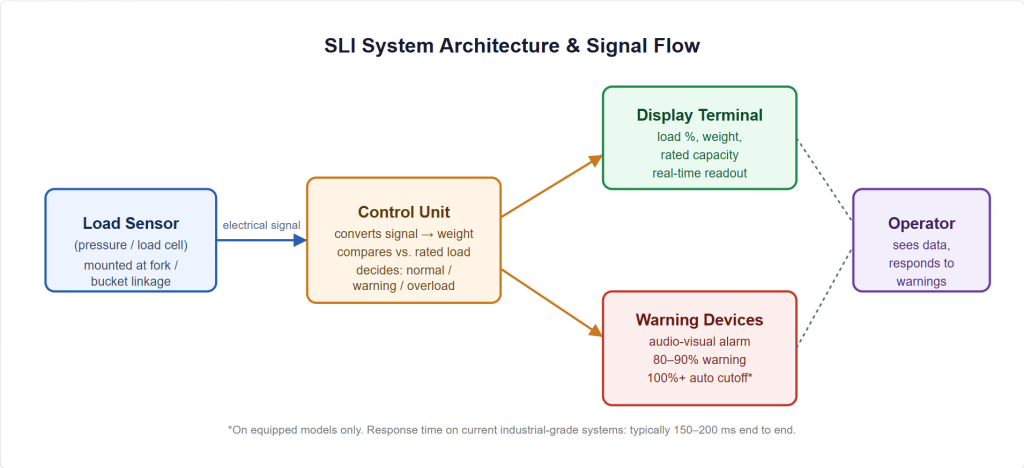
Um sistema SLI completo é composto por quatro componentes coordenados:
- Sensor — um sensor de pressão ou de célula de carga montado no ponto de apoio da carga (por exemplo, no circuito hidráulico dos garfos de uma empilhadora ou na articulação de fixação da caçamba de uma carregadora), que converte a carga mecânica num sinal elétrico.
- Unidade de controlo — o «cérebro» de processamento que converte o sinal bruto num valor de peso, compara-o com a carga nominal de segurança e determina se a máquina se encontra num estado normal, de aviso ou de sobrecarga.
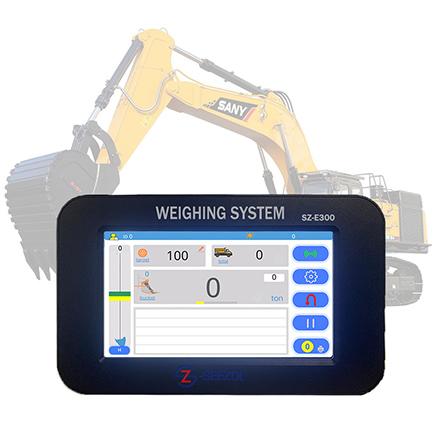
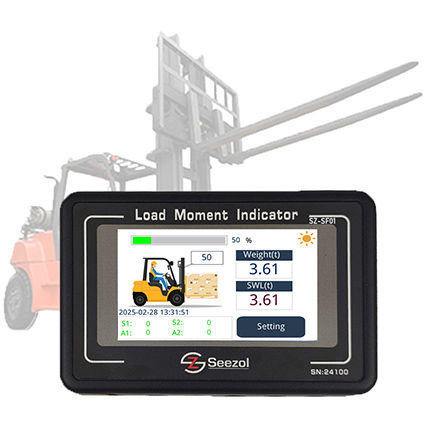
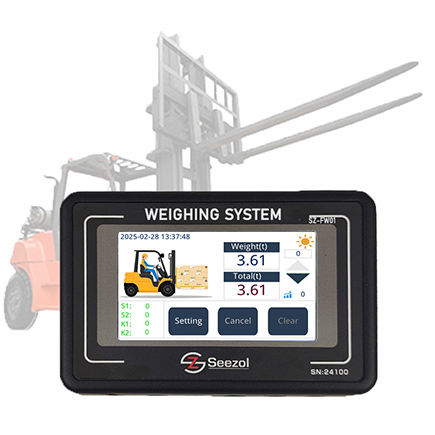
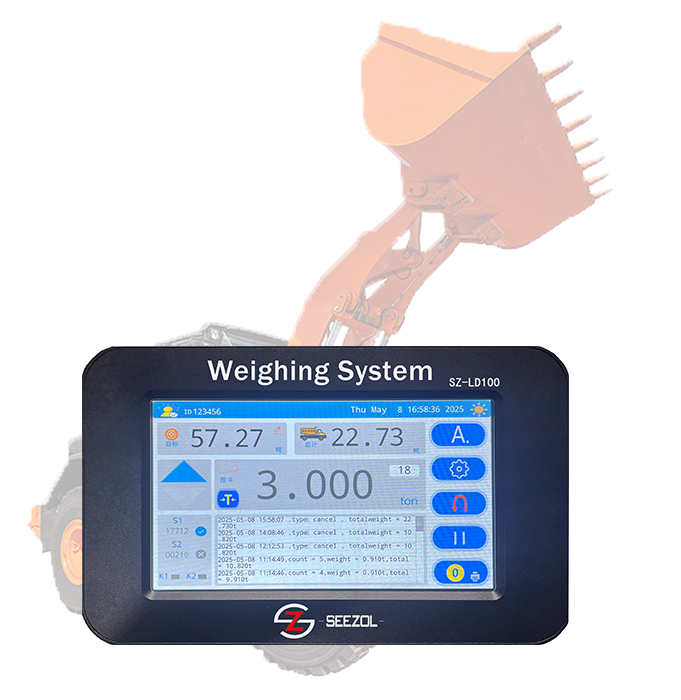
- Terminal de visualização — um visor na cabina que indica a carga atual, a capacidade nominal e a percentagem de carga.
- Componente de alarme — alertas sonoros e visuais programados e, em alguns modelos, uma ligação ao sistema de controlo da máquina para a restrição automática do movimento em caso de sobrecarga.
Princípio de funcionamento, passo a passo: tomando como exemplo um empilhador — à medida que os garfos levantam uma carga, as variações na pressão hidráulica são detetadas pelo sensor e enviadas para a unidade de controlo; a unidade de controlo converte esse sinal num valor de peso e compara-o com a capacidade nominal do empilhador; abaixo do limiar de aviso, o ecrã mostra simplesmente os dados em tempo real; cerca de 80–90% da capacidade nominal, soa um alarme de aviso; a partir de 100%, é acionado um alarme de emergência e, nos modelos equipados com essa funcionalidade, a elevação é restringida até que a carga seja reduzida. Nos sistemas atuais de nível industrial, todo este ciclo funciona normalmente com um tempo de resposta de 150–200 milissegundos, o que é suficientemente rápido para que não haja qualquer atraso significativo entre o surgimento de uma condição de sobrecarga e o alerta ao operador.
Exemplo resolvido: Uma empilhadeira com capacidade nominal de 2 000 kg levanta uma palete com 1 750 kg. Isso corresponde a 87,51 TP4T da capacidade nominal — o suficiente para acionar o alarme da zona de aviso num SLI devidamente configurado, levando o operador a verificar a carga antes de prosseguir com a elevação, mesmo que a empilhadeira, tecnicamente, ainda não tenha excedido a sua capacidade nominal.
3. Onde o SLI é realmente utilizado
- Armazenagem e logística — as empilhadoras que manuseiam cargas frequentes e variáveis constituem um ponto de risco comum de sobrecarga; neste contexto, os sistemas SLI costumam dar ênfase a alarmes graduais e ao registo de dados para auditorias de segurança da frota.
- Mineração — As carregadoras e os equipamentos com garra que transportam minério ou resíduos em condições de elevado nível de poeira e vibração necessitam de hardware SLI concebido para esse ambiente (a proteção IP65+ é praticamente imprescindível neste caso), uma vez que a sobrecarga neste contexto tende a manifestar-se, ao longo do tempo, sob a forma de danos no sistema hidráulico e na estrutura, em vez de uma única falha dramática.
- Construção em geral — as escavadoras e as carregadoras que realizam trabalhos de movimentação de terras e de materiais enfrentam cargas altamente variáveis ao longo de um turno; o valor prático de um SLI, neste caso, não reside tanto na prevenção de falhas catastróficas, mas sim na prevenção do desgaste cumulativo e do tempo de inatividade resultantes da sobrecarga rotineira.
- Portos e terminais — O funcionamento quase contínuo, 24 horas por dia, significa que os sistemas SLI neste contexto são normalmente especificados com monitorização remota e registo de dados como padrão, e não como opcional, para que os eventos de sobrecarga sejam transmitidos para a gestão centralizada do equipamento, em vez de serem detetados apenas quando algo avaria.
4. Lista de verificação para a compra: parâmetros essenciais a comparar
| Parâmetro | De nível básico, de qualidade industrial | Nível de maior precisão | Por que é importante |
|---|---|---|---|
| Precisão da medição | ±3% | ±1–2% (manuseamento de mercadorias perigosas ou de alta precisão) | Uma tolerância mais restrita significa menos falsos alarmes e menos casos de sobrecargas reais que passam despercebidas |
| Proteção contra a penetração | IP65 (à prova de poeira e salpicos) | IP67 (zonas costeiras, mineração, condições de humidade extrema) | Se a classificação for inferior a IP65, é de esperar uma degradação acelerada do sensor e dos circuitos em ambientes exteriores |
| Temperatura de funcionamento | -20 °C a +60 °C | Gamas mais amplas para climas extremos | Tenha em conta as condições reais do local, e não apenas a média regional |
| 3. Tempo de resposta | ≤200 ms | ≤150 ms | Uma resposta mais rápida reduz o intervalo de tempo entre o início de uma sobrecarga e o acionamento do alarme |
| Lógica do alarme | Níveis de alerta: ~80–90%, 100%+ (emergência) | O mesmo, além de limiares configuráveis consoante o modo de funcionamento | Uma medida drástica e única pode ser mais perturbadora do que uma resposta gradual |
| Consumo de energia | Tensão fixa | CC de ampla gama (por exemplo, 9–36 V) para compatibilidade entre marcas | O que é mais importante nas adaptações de empilhadores numa frota mista |
| Conformidade do projeto/construção | Cumpre a norma de conceção de empilhadores motorizados aplicável na sua região (ver Secção 5) | Teste/aprovação documentados por um laboratório de ensaios reconhecido | Um dispositivo que não tenha sido fabricado de acordo com a norma de conceção aplicável pode não ser legalmente utilizável numa máquina abrangida por essa norma |
Complementos úteis, caso a sua operação os necessite: registo de dados (para auditorias de segurança da frota), monitorização remota/na nuvem através de 4G ou LoRa (para gestão de várias localizações), desligamento automático associado ao equipamento e recalibração no local com um único clique (reduz a dependência de uma visita de assistência técnica para a recalibração de rotina).
5. Certificações e normas a consultar junto de um fornecedor
Os requisitos regulamentares são a única área em que «confiar na ficha técnica» não é suficiente — peça a qualquer fornecedor que indique a norma específica segundo a qual o seu equipamento foi concebido e testado.
- Estados Unidos — veículos industriais motorizados (empilhadores e equipamento semelhante): A norma da OSHA para a indústria em geral, 29 CFR 1910.178, exige que apenas sejam manuseadas cargas dentro da capacidade nominal de um empilhador e que os novos empilhadores motorizados cumpram os requisitos de conceção e construção da Norma Nacional Americana para Empilhadores Motorizados (ANSI B56.1). O apêndice não obrigatório da norma relativo à estabilidade explica os princípios físicos subjacentes em termos de momento de carga: um camião mantém-se estável apenas enquanto o momento de contrapeso do próprio veículo for igual ou superior ao momento da carga em torno do eixo de inclinação da roda dianteira, sendo a capacidade nominal definida em relação a uma distância específica do centro de gravidade da carga, em vez de como um valor único de peso fixo.
- Estados Unidos — estaleiros de construção: O artigo 29 CFR 1926.602(d) aplica os mesmos requisitos de formação relativos a empilhadores industriais motorizados ao equipamento de construção abrangido pela Subparte O, incluindo a maioria das carregadoras. A OSHA esclareceu separadamente que os veículos destinados principalmente à movimentação de terras (tais como as minicarregadoras) não estão abrangidos pelo requisito específico da norma de conceção da secção 1910.178, embora as obrigações gerais de formação sobre riscos continuem a aplicar-se.
- Fora dos EUA: A maioria dos principais mercados dispõe de uma norma de segurança equivalente para a conceção de empilhadores industriais (por exemplo, a adoção a nível nacional da série ISO 3691 para empilhadores industriais ou códigos de segurança específicos de cada região para empilhadores e carregadores). Se a sua empresa opera em vários países, peça a cada fornecedor que confirme em que norma o seu equipamento equipado com SLI está certificado em cada mercado, em vez de partir do princípio de que um único certificado abrange todas as jurisdições.
Conclusão para o comprador: A menção «cumpre as normas internacionais de segurança» numa ficha técnica não é o mesmo que indicar uma norma específica e verificável, juntamente com o número da cláusula. Se um fornecedor não puder apresentar essa informação, considere a alegação de conformidade como não verificada.
6. Instalação e manutenção
Noções básicas de instalação:
- Instale o sensor no ponto de suporte da carga (circuito hidráulico, articulação do garfo, suporte da caçamba), garantindo uma ligação firme e com carga uniformemente distribuída — a vibração e uma montagem desequilibrada são causas comuns de desvio nas medições.
- Instale o ecrã num local onde o operador o possa ver sem obstruções e, sempre que possível, proteja-o da luz solar direta e da chuva.
- Posicione o alarme de forma a que os sinais sonoros e visuais sejam claramente percetíveis a partir do assento do operador.
- Mantenha a cablagem de alimentação e de sinal separadas e impermeabilize todos os pontos de ligação no exterior.
- Preveja cerca de meio dia a um dia inteiro para uma instalação padrão de uma única máquina e para a calibração inicial; a implementação em frotas com várias máquinas tem uma duração que varia de forma aproximadamente linear, acrescida do tempo de configuração necessário para qualquer integração com sistemas de gestão de frotas ou de monitorização remota.
Calibração e manutenção:
- Efetue a calibração em condições de vazio, carga nominal e sobrecarga imediatamente após a instalação e guarde o certificado de calibração nos seus registos.
- Realize uma inspeção completa aproximadamente a cada 6 meses (precisão do sensor, cablagem, integridade da caixa), reduzindo o intervalo em caso de utilização no exterior ou com elevada frequência.
- Efetue uma recalibração completa pelo menos uma vez por ano — com maior frequência no caso de equipamentos utilizados continuamente ao ar livre.
- Qualquer avaria no ecrã ou falha no alarme deve ser considerada uma condição que exige a interrupção do trabalho até ser resolvida; operar com um sistema de monitorização com avaria conhecida contraria o próprio objetivo da sua existência.
7. Notas de campo: Padrões comuns de falha
O problema do «ecrã limpo, número errado». O problema mais comum do SLI no terreno não é uma avaria dramática — trata-se de um desvio gradual do sensor, causado pela vibração e pelas variações de temperatura, que altera o ponto zero em alguns por cento sem desencadear qualquer falha visível. O visor continua com um aspeto normal; o limiar de alarme não se alterou; mas o ponto de disparo real deslocou-se. É precisamente por isso que a recalibração programada é mais importante do que ficar atento às luzes de aviso.
Incompatibilidades entre frotas. Em instalações que utilizam equipamento misto (empilhadores de um fabricante, carregadores de outro), é comum ver um SLI, calibrado corretamente para a capacidade nominal de uma máquina, acidentalmente deixado com as predefinições após ter sido transferido para uma unidade diferente. A solução é de natureza processual, não técnica: considere a recalibração como um passo obrigatório sempre que um SLI for transferido entre máquinas, e não como um passo opcional.
O ângulo morto do centro de carga. Um padrão de falha mais subtil: um SLI de empilhador validado apenas no centro de carga padrão (normalmente 24 polegadas para empilhadores mais pequenos) pode emitir um aviso insuficiente quando uma carga com peso nominal real é transportada mais para fora nos garfos do que esse ponto de referência — exatamente o cenário que o apêndice de estabilidade da OSHA descreve como um aumento do momento de carga, mesmo que o peso bruto não tenha mudado. Verifique se um determinado SLI tem em conta a posição da carga, ou apenas o peso bruto, antes de assumir que abrange totalmente este modo de falha.
8. Erros comuns na compra
- Escolher apenas com base no preço. Um dispositivo ±3% e um ±1% podem parecer semelhantes numa ficha técnica; a diferença só se nota na prática, normalmente durante a elevação que mais importa.
- Confiar na menção «cumpre as normas internacionais» sem um número de certificado. Esta é a alegação vaga mais comum nesta categoria de produtos — pergunte sempre qual é a norma e a cláusula específicas.
- Ignorando o custo total de propriedade. A calibração anual, a substituição dos sensores e o potencial tempo de inatividade devem ser tidos em conta na decisão de compra, e não apenas o preço inicial do equipamento.
- Especificações excessivas para a aplicação. Vale a pena investir na precisão de nível «mercadorias perigosas» ±1–2% em operações de manuseamento de alta precisão; no entanto, tal precisão é frequentemente desnecessária para operações de elevação de rotina em recintos fechados, bem abaixo da capacidade máxima, onde um equipamento de gama média com uma boa rotina de calibração é suficiente.
9. Perguntas frequentes
Posso utilizar um SLI num guindaste em vez de um LMI?
Não. Um SLI monitoriza apenas o peso, o que não tem em conta o facto de a capacidade de segurança de uma grua variar consoante o raio de trabalho. As gruas que realizam elevações com raio variável necessitam de um LMI.
De que nível de precisão é que, na verdade, preciso?
O ±3% constitui uma referência razoável de nível industrial para a maioria das aplicações em empilhadores, carregadores e escavadoras. Reserve a precisão de ±1–2% para operações de manuseamento de alto risco, tais como o transporte de mercadorias perigosas, em que o custo adicional se justifica.
Com que frequência é que um SLI precisa de ser recalibrado?
Pelo menos uma vez por ano, com uma inspeção completa aproximadamente a cada 6 meses; reduza ambos os intervalos em caso de utilização ao ar livre ou de utilização frequente e recalibre sempre após uma reparação ou após a transferência da unidade para outra máquina.
A classificação IP65 é suficiente para utilização no exterior?
É o mínimo necessário para um funcionamento contínuo ao ar livre. Em ambientes costeiros, mineiros ou outros ambientes extremos, vale a pena o custo adicional da classificação IP67.
Que norma devo pedir a um fornecedor que certifique?
Nos EUA, informe-se sobre a conformidade do projeto com a norma ANSI B56.1 (referenciada pela OSHA 29 CFR 1910.178) para empilhadores e confirme a cobertura prevista na norma 29 CFR 1926.602(d) para equipamento de estaleiros de construção. Fora dos EUA, pergunte qual a norma de segurança para carretas industriais, nacional ou alinhada com a ISO, que se aplica ao seu mercado específico.
10. Sobre este artigo
Normas editoriais: As alegações técnicas aqui apresentadas são verificadas à luz dos textos regulamentares disponíveis ao público (OSHA/ANSI) à data da redação deste documento. Nos casos em que um valor é apresentado como referência do setor, em vez de uma alegação de marketing de um único fornecedor, procurámos indicá-lo explicitamente.
Correções: Este documento é considerado um documento em constante atualização — sinalizem qualquer imprecisão, especialmente no que diz respeito a uma cláusula regulamentar específica, e iremos corrigir e atualizar a data do artigo, em vez de o editar discretamente.
Contacto: contacte a redacção através do endereço sales@seezol.com.
Fontes citadas
- OSHA 29 CFR 1910.178 — Veículos industriais motorizados, incluindo o apêndice não obrigatório sobre estabilidade relativo aos conceitos de momento de carga e centro de gravidade
- ANSI B56.1 — Norma Nacional Americana para Carretas Industriais Motorizadas, incorporada por referência no 29 CFR 1910.178
- OSHA 29 CFR 1926.602(d) — Requisitos de formação sobre equipamento de manuseamento de materiais na construção civil e cartas de interpretação da OSHA relacionadas com o âmbito de aplicação no que diz respeito ao equipamento de movimentação de terras
- Série ISO 3691 — família de normas internacionais relativas aos requisitos de segurança dos veículos industriais (consulte o organismo de normalização regional para saber qual a versão adotada no seu mercado)